


The Battle for the Blue Heart of Europe: Communities Refuse to Surrender Their Rivers
Small hydropower plants continue to proliferate along rivers in Albania and the Western Balkans, fuelling years-long conflicts between companies and local communities. In Albania and Bosnia and Herzegovina, hydropower projects continue to advance through administrative procedures despite opposition from residents and court rulings that have annulled certain permits and administrative acts.
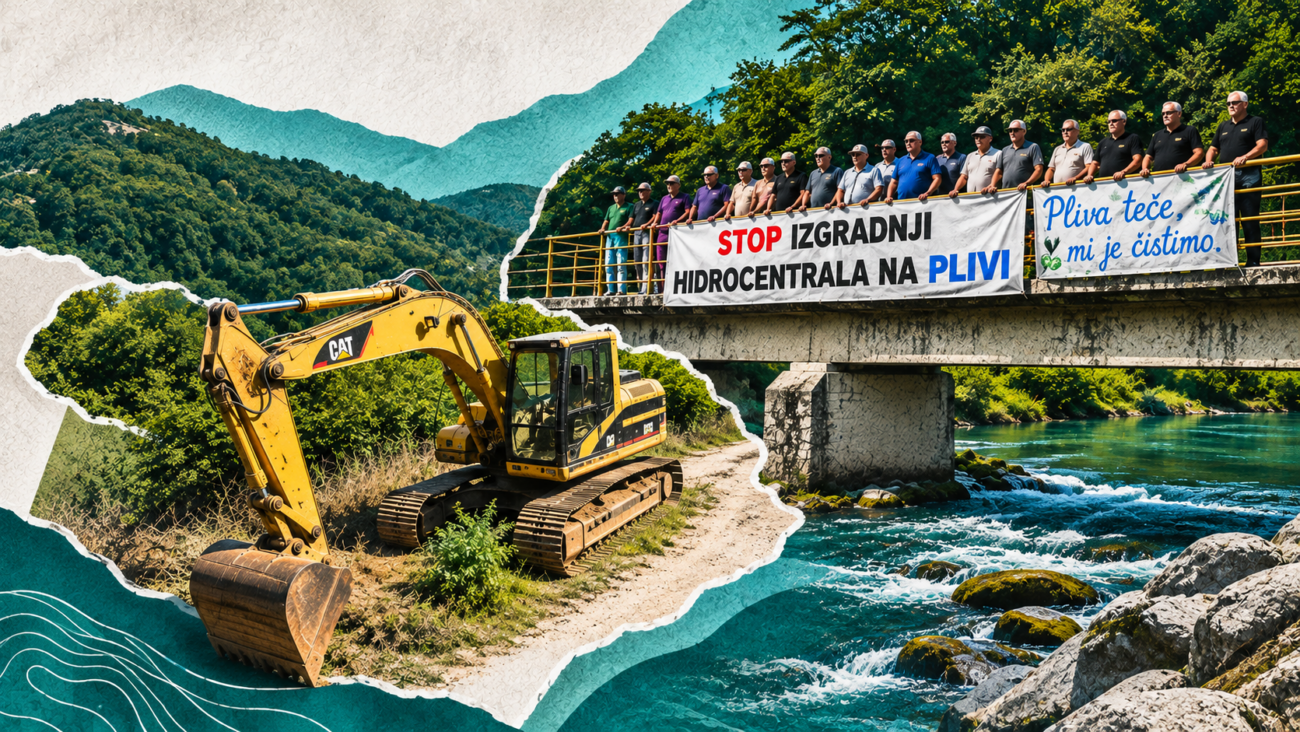
Illustrative graphic by Media Amfora depicting local communities’ struggles to protect water resources in Albania and Bosnia and Herzegovina.
“Alright, alright, we understand. We’re coming,” Rexhep Kuleni abruptly ends the conversation after answering an urgent phone call that also interrupts the interview.
“Those representatives from Doma have come, obviously to provoke us. Come on, let’s gather the people and go defend our waters,” he tells his fellow villagers, who had agreed to speak with us for an interview.
“Yes, yes, come on, let’s go straight there,” the residents of Kurdari respond, almost in unison.
Moments later, the doors of all the cars parked nearby slam shut in rapid succession. Others arrive on motorcycles and quickly follow the vehicles as soon as they hear that workers from the company constructing the hydropower plant have entered the area.
Upon reaching the entrance to the village, like a well-rehearsed theatre troupe, they restrain their emotions and wait for the next act of a drama they have been performing for years. Once again, the pickup truck carrying the company’s workers leaves the village empty-handed.
Kurdari is the “agricultural heart” of the Mat region, supplying several towns and surrounding villages with agricultural produce. All of this is made possible by the Lusa Stream (Përroi i Lusës), which flows for 18 kilometres from the Balgjaj Lakes area before emptying into the Mat River.
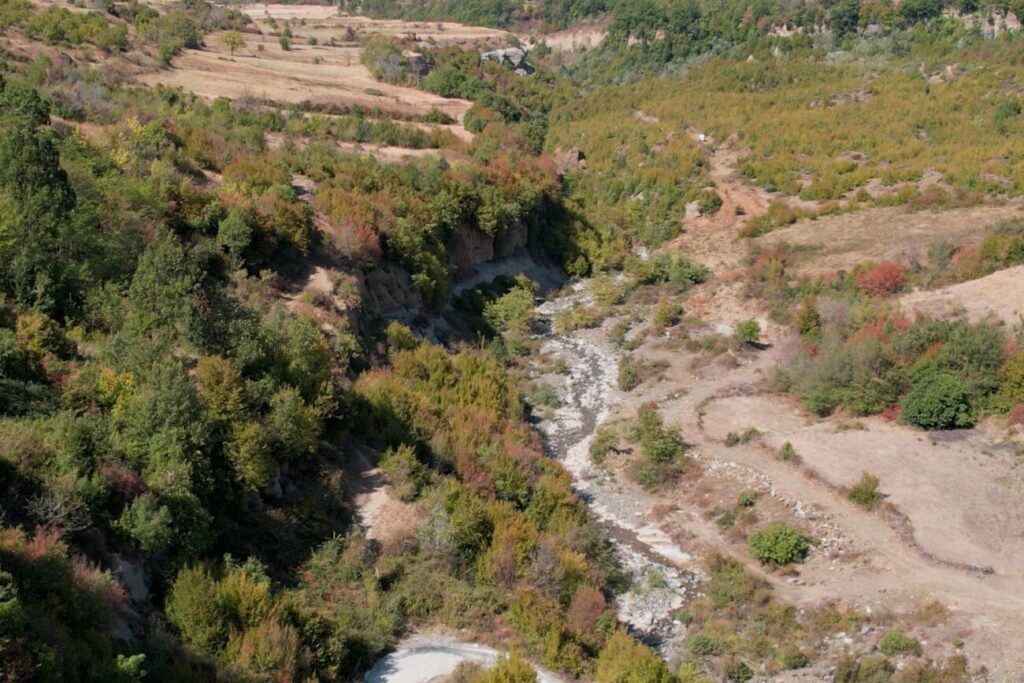
The Lusa Stream in the village of Kurdari almost dries up during the summer, while its limited water flow is insufficient even to irrigate the local community’s agricultural land. Photo: Media Amfora
After winning several battles over the years to protect this stream from various companies, residents have been opposing the construction of another hydropower plant, called “Doma”, since 2020.
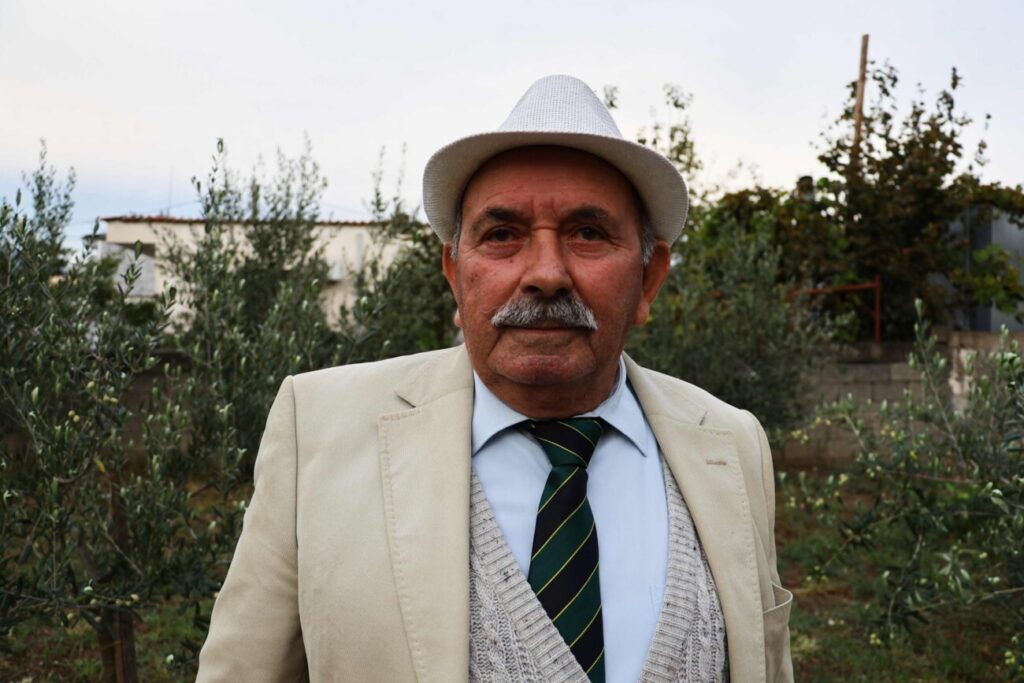
“We have sworn that we will not allow hydropower plants to be built in Kurdari because water is life. Even the children in kindergarten and school are watching us. They are stressed because they, too, are thinking about their future, knowing that life without water is impossible,” said Rexhep Kuleni, a resident of Kurdari, firmly.
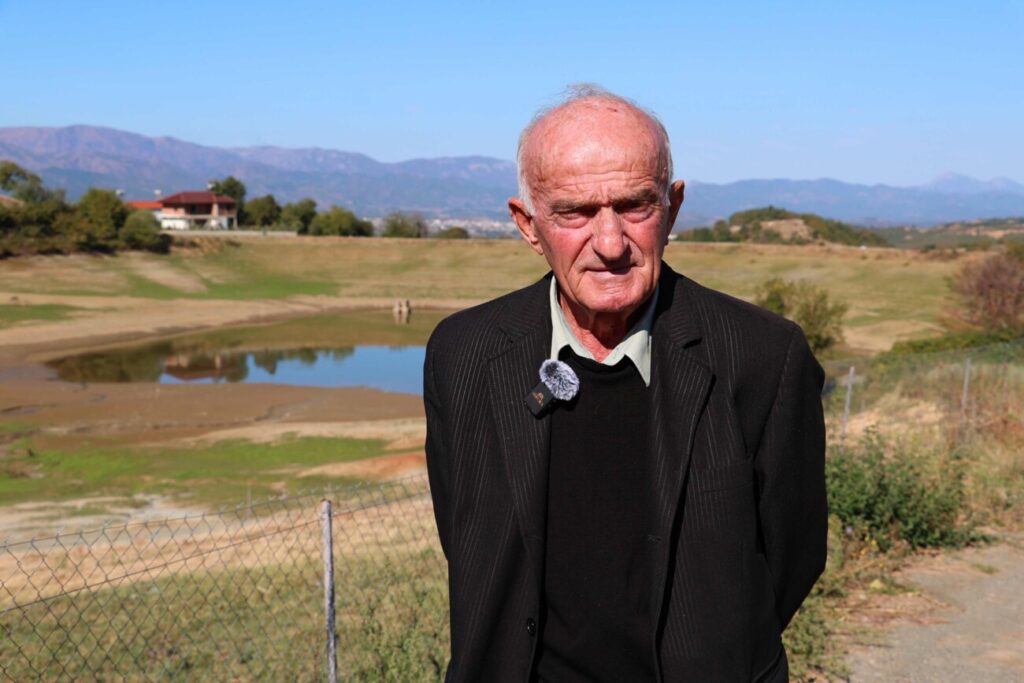
Rexhep Kuleni, one of the leading figures in the organisation and resistance of Kurdari residents in the Mat region against the construction of hydropower plants, speaking to Media Amfora.
The story of this village in the Mat region mirrors a conflict that has been recurring for years in many local communities across Albania and the wider Balkans, where the construction of small hydropower plants has pitted investors’ interests against those of residents who depend on water resources.
In Albania, after coming to power in 2013, the Socialist Party promised a comprehensive review of concession contracts and transparency regarding their legality. Yet, 13 years later, largely “out of the public eye”, projects to harness rivers for hydropower generation continue to advance much as they did a decade ago.
Amfora, an independent Albanian media outlet focusing on investigative journalism and local communities, analysed data provided by the National Agency of Natural Resources (AKBN), identifying 270 administrative records relating to hydropower contracts and projects. Of these, 165 (61.1%) are classified as being in the production phase, 31 (11.5%) are under construction, and construction work has yet to begin on 74 (27.4%).
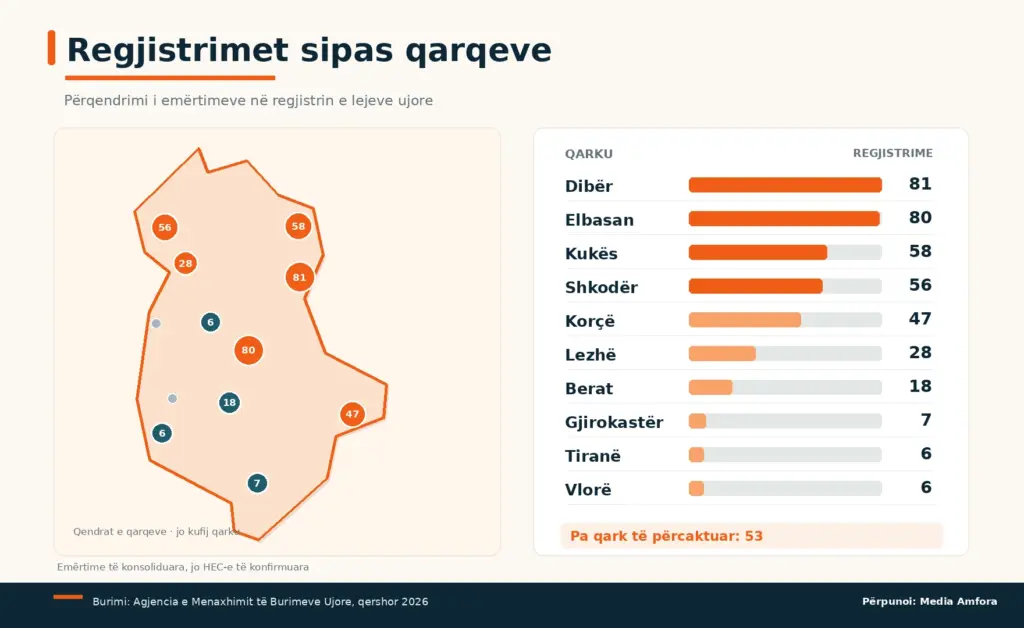
Behind the hydropower plants opposed by villagers and the court proceedings in which these disputes often end lies a much broader picture of the hydropower exploitation of Albania’s rivers. Data analysed by Media Amfora, based on the register of the Water Resources Management Agency (AMBU), show that Dibër leads with 81 preliminary groupings of hydropower projects, followed by Elbasan with 80, Kukës with 58, and Shkodër with 56.
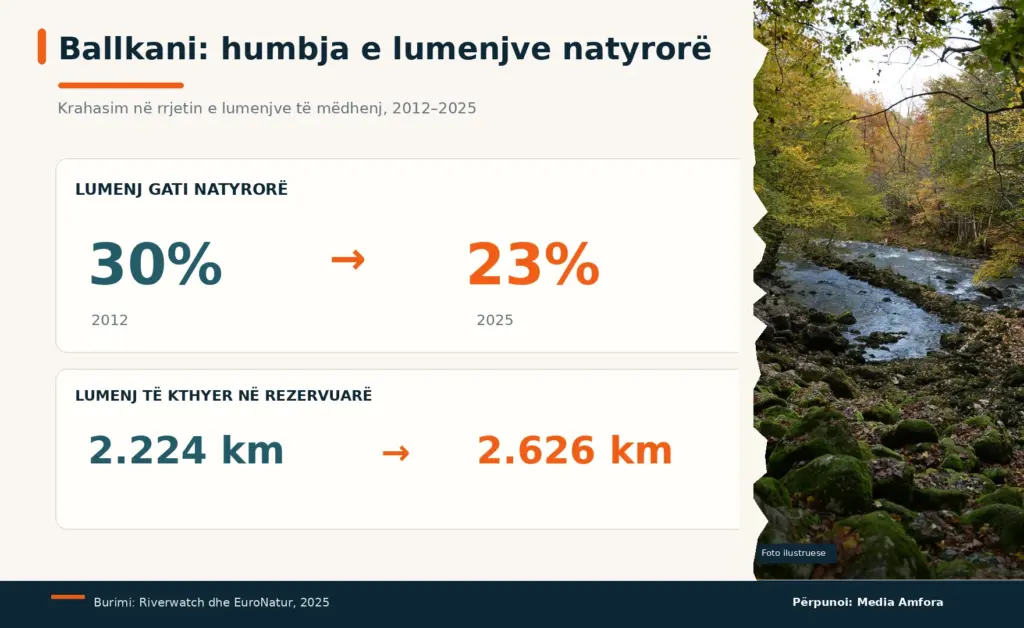
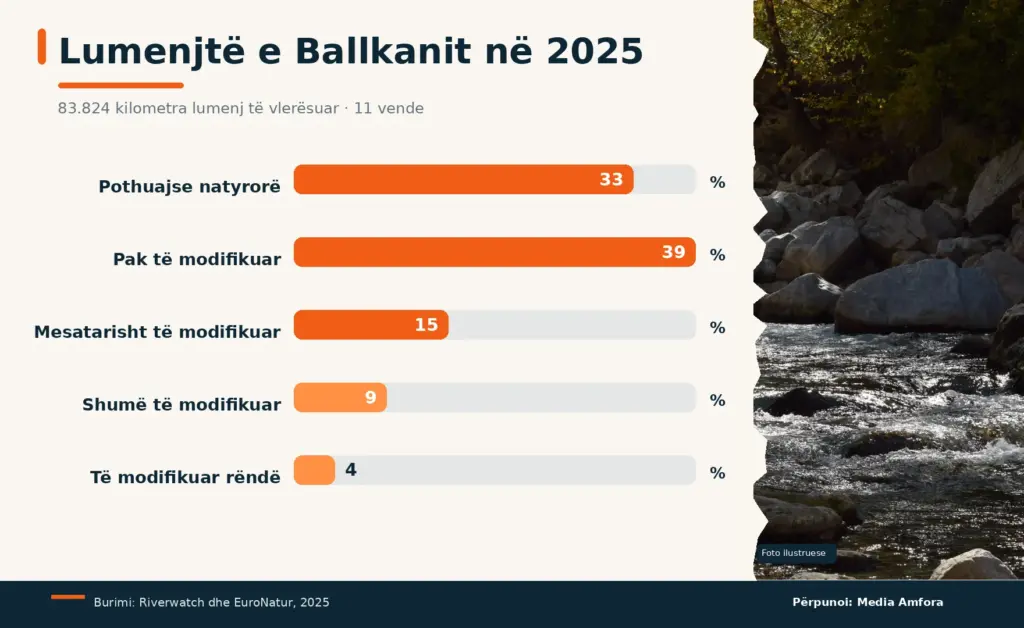
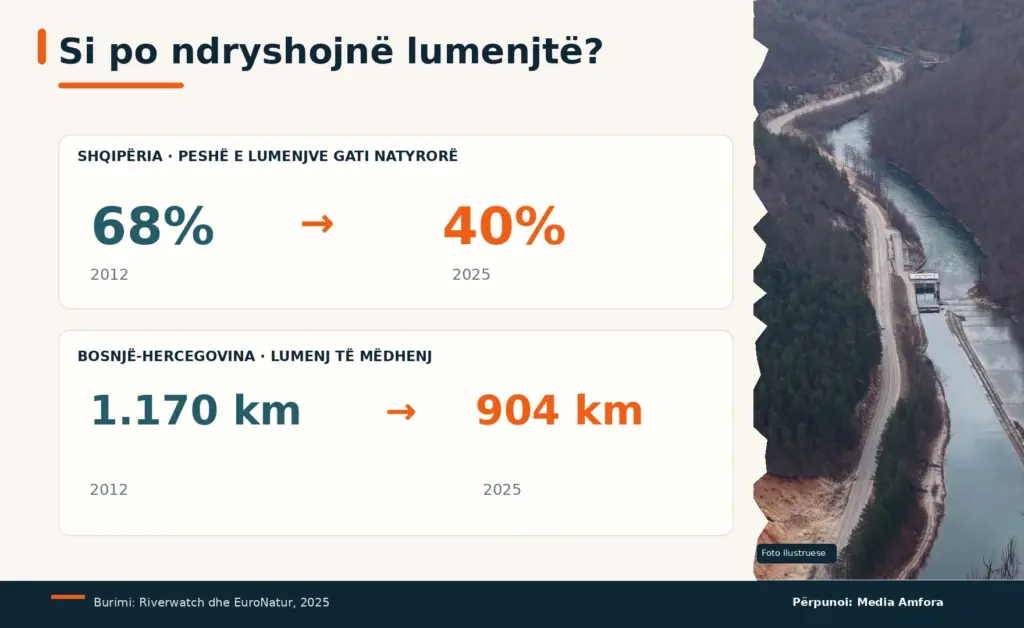
The phenomenon has affected the Western Balkans for years. According to the scientific report “State of Balkan Rivers 2025”, prepared for the organisations Riverwatch and EuroNatur, the Balkans lost approximately 2,450 kilometres of near-natural river stretches between 2012 and 2025. The proportion of river stretches classified as near-natural declined from 30% to 23%, with hydropower development identified as one of the main drivers of their degradation.
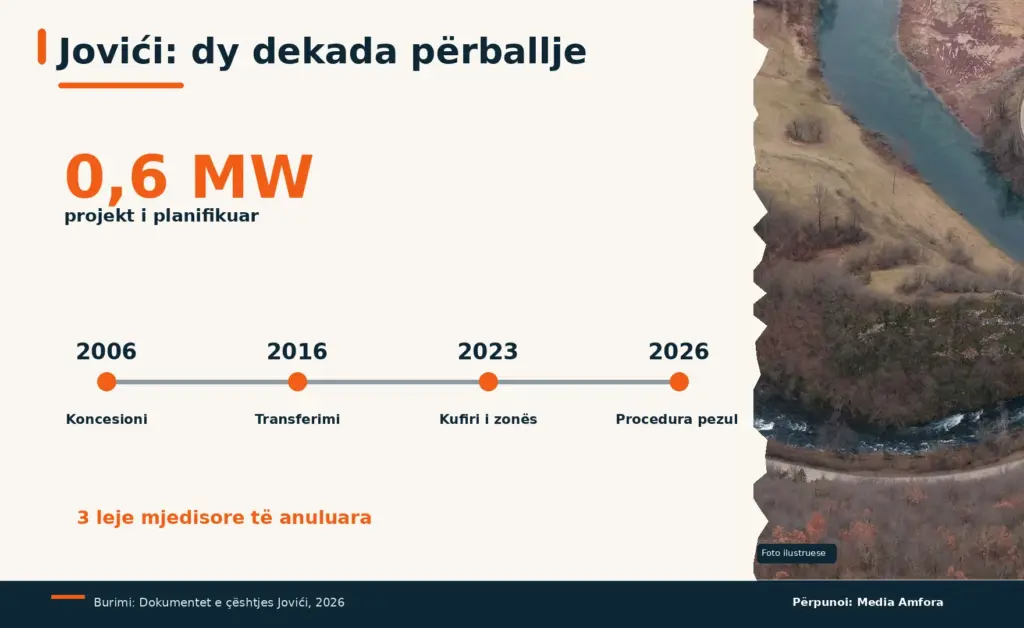
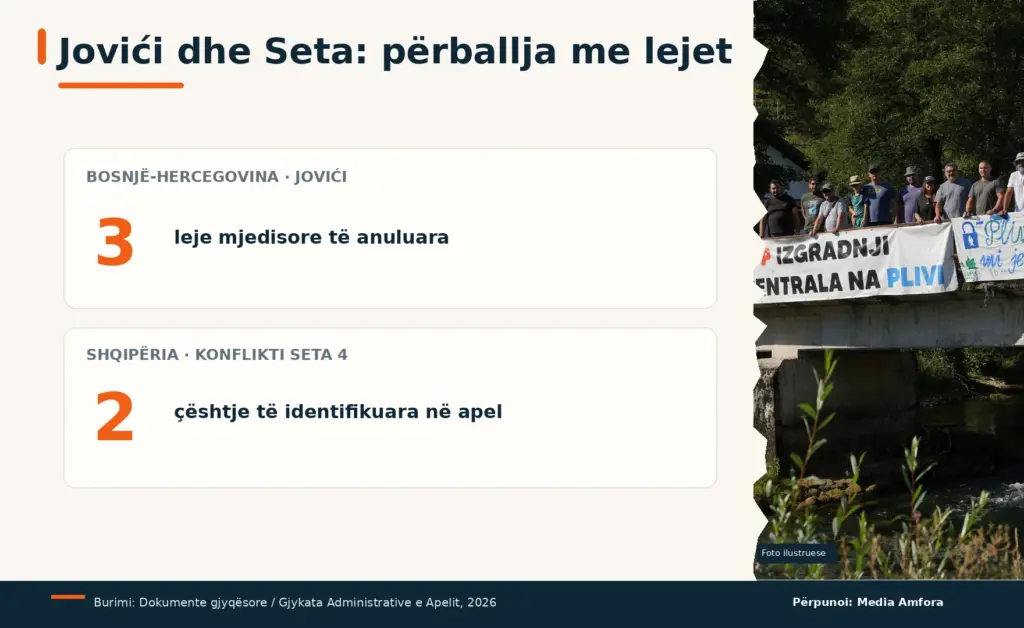
To document the challenges faced by local communities confronting hydropower projects beyond Albania, Media Amfora extended its investigation to Bosnia and Herzegovina, focusing on the Pliva River, where residents have been opposing the construction of the “Jovići” hydropower plant for years. The project has a capacity of just 0.6 megawatts, and although the courts have annulled three environmental permits, it has still not been definitively abandoned.
“No amount of revenue from the electricity that would be generated by the planned hydropower plant could compensate for the destruction of the Pliva River’s natural environment,” explained hydrologist Muriz Spahić.
The Ghosts of the Balkan Mountains
In Albania, around 15 kilometres from Kurdari, in the village of Guri i Bardhë, perched like a crown above the Mat River valley, another hydropower project appears and disappears from time to time, reviving residents’ fears of losing their water.
The “Guri i Bardhë 1 and 2” hydropower plants, developed by the company Gealb Energy, are based on a concession contract signed in 2017. In March 2021, following a petition by residents opposing the hydropower project, it received a negative environmental assessment, as the company had failed to comply with repeated requests from the National Environment Agency (AKM) to conduct a new public hearing.
Nearly five years after disappearing from the scene, the company resurfaced on 16 July 2026 with a new application. The AKM subsequently required, in accordance with the law, a consultation process involving broad participation from residents of every affected village.
“They disappeared for about three or four years, and now they have started holding public hearings again. On 29 September, they once again held one secretly, in a villager’s house at the far end of the village,” Lavdrim Xira, a resident of Guri i Bardhë, told Amfora.
“We found out about it a week later, and from what we understand, they intend to submit another application to obtain the environmental permit, because that is their ultimate goal,” he explained, referring to the company’s latest actions.
The original footprint of the “Guri i Bardhë 1” hydropower project extended into the “Mali me Gropa–Bizë–Martanesh” Protected Area, while the revised project was relocated outside its boundaries. Nevertheless, an assessment by the Dibër Regional Environmental Agency, reviewed by Amfora, highlighted the proximity of two water intake structures to the protected area’s boundary.
“Potential impacts include the loss of forest areas and forest ecosystem services, habitat fragmentation, disturbance of wildlife, alterations to the natural flow of water, among others,” the environmental authorities noted in their assessment of the project’s possible impacts.
For local residents, this project has been looming over the village for almost a decade, and its return has mobilised not only those who live there but also members of the community living abroad. Lavdrim Xira explains that, while he has been trying year after year to attract tourists from across Europe to discover Guri i Bardhë, the hydropower development plans could undermine his dream of developing tourism in the village.
“This village is one of the 100 designated tourist villages and has great potential because it is very close to the capital. Yet there are two or three hydropower plants planned, right through the valley that runs across the entire village. That would amount to total devastation,” Xira explained.
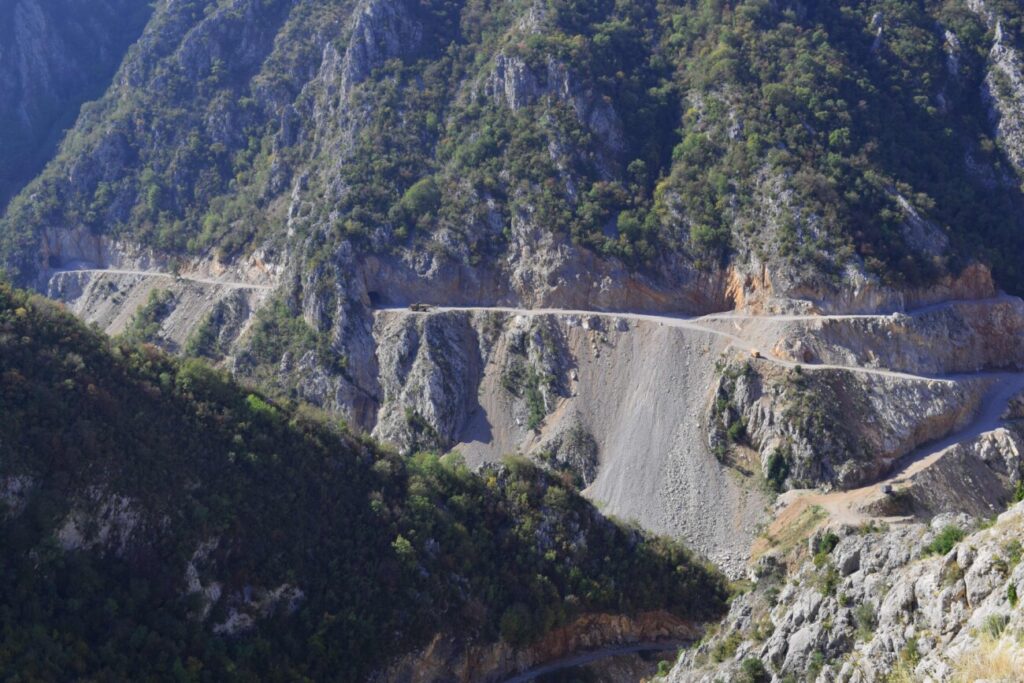
Hydropower plants have transformed the natural landscape near the villages of Guri i Bardhë and Plani i Bardhë, in the Municipality of Klos, altering water flows and the appearance of the valley. Photo: Media Amfora
Amfora identified several irregularities in the procedures that led to the project’s environmental approval in February 2022, according to an audit by Albania’s Supreme State Audit Institution. The report found that although the Municipality of Klos had previously submitted a negative opinion, together with a petition from residents, an “automatic approval by tacit consent” was recorded in the electronic system in September 2021.
According to Danjel Bica, an environmental engineer and executive director of the association “Young Environmental Experts” in Bulqizë, the methods used to assess the environmental impacts of hydropower projects also leave room for technical interpretation.
“The environmental impact assessments that are prepared conclude that hydropower plants have no environmental impact. This is contradictory because when you intervene in the environment, dig a canal, cut down forests, pour concrete, and then claim there is no environmental impact, that is fundamentally wrong from the outset,” Bica emphasised.
Although the project has twice failed to secure the green light from environmental authorities, it is once again attempting to move forward this autumn, facing residents who have mobilised against it for the fourth time.
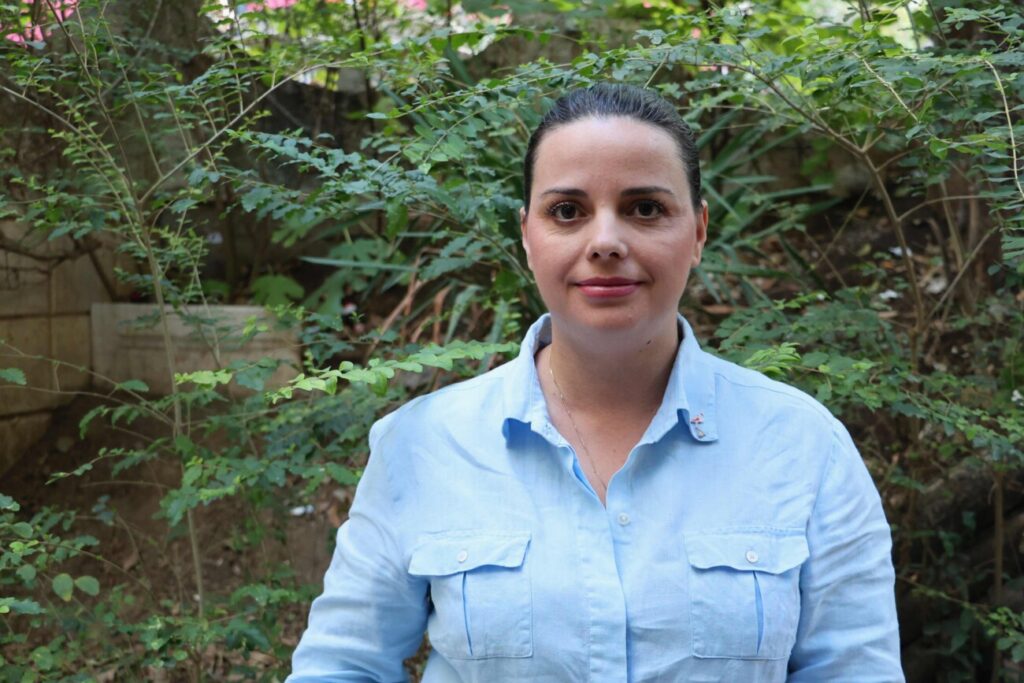
“On the one hand, communities are kept in the dark, neither consulted nor heard. On the other hand, developers have all the access and information they need, and can certainly obtain all the necessary permits by bypassing the community, or at least by pretending that they have consulted it,” explained environmental activist Besjana Guri, who described the proliferation of small hydropower plants in the Balkans as an “epidemic” affecting rivers and streams throughout the region.
Three Environmental Permits Annulled on the Pliva River, Yet the Project Remains
A similar story is unfolding on the Pliva River in Bosnia and Herzegovina, where the “Jovići” hydropower plant remains a project whose looming presence has threatened the residents of the village of Pljeva for the past 20 years.
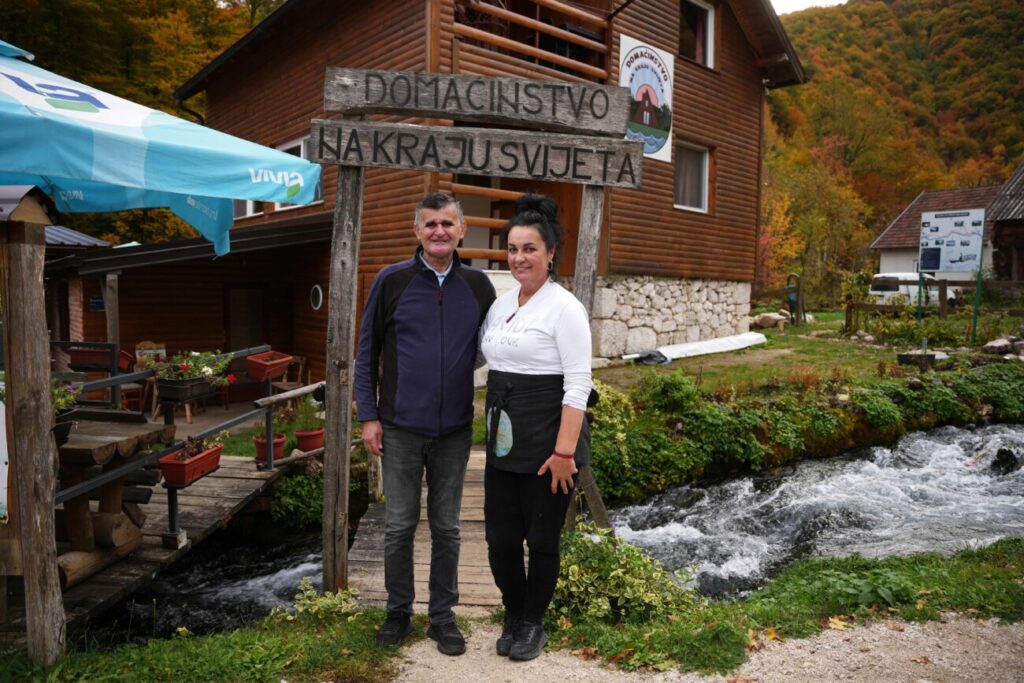
Slobodanka and Slobodan Vasić, entrepreneurs in the hospitality and food service sector and residents of the village of Pljeva, in the municipality of Šipovo, Bosnia and Herzegovina. Photo: Dejan Rakita
The concession agreement was signed in February 2006, with an initial deadline of just 21 months to complete the investment. However, the hydropower plant was never built, and the contract was transferred to another company in 2016.
In December 2023, the authorities of Republika Srpska altered the proposed boundaries of a future protected area, excluding the site of the hydropower plant. Unlike in Guri i Bardhë, where the project’s footprint was modified, on the Pliva River it was the planned boundary of the protected area that was changed.
The dispute with the authorities continued in the courts. During 2025, the ministry responsible for environmental protection in Republika Srpska issued three environmental permits for the “Jovići” hydropower plant, but all three were annulled by the District Court in Banja Luka. The most recent annulment came in June 2026. Nevertheless, the concession was not terminated, and while the authorities await the conclusion of the judicial proceedings, residents continue to demand protection for the river.
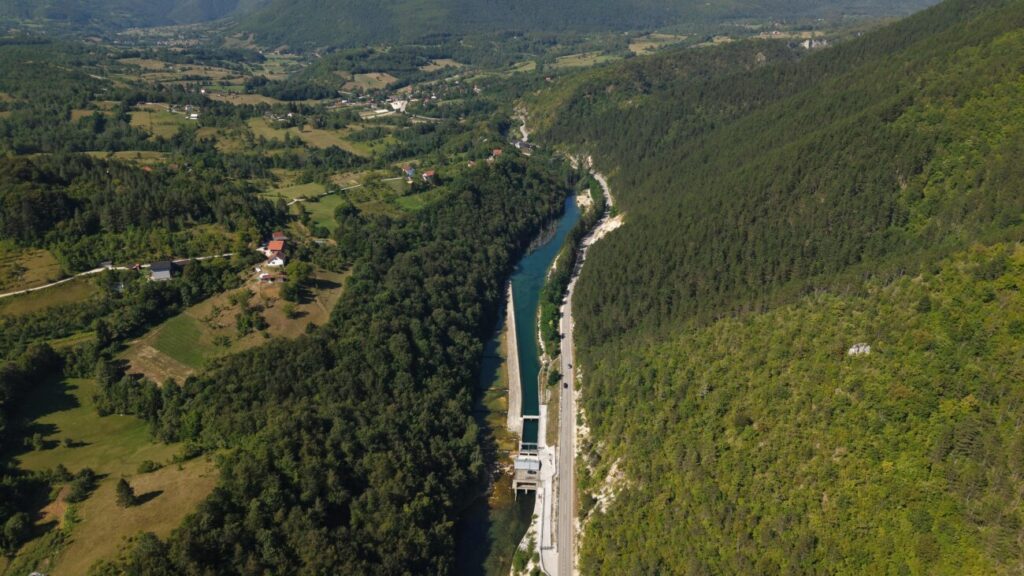
For hydrologist Muriz Spahić, founder of the Association of Geographers of Bosnia and Herzegovina and former dean of the Faculty of Science in Sarajevo, interventions in the Pliva River threaten an irreplaceable natural heritage.
“All human interventions, whether planned or already underway on the Pliva River, are damaging an irreplaceable natural environment. They are permanently destroying what took nature more than two million years to create,” he warned.
Meanwhile, Bosnian scientist Dalibor Ballian, a professor at the Faculty of Forestry at the University of Sarajevo and a corresponding member of the Academy of Sciences and Arts of Bosnia and Herzegovina, emphasised the importance of water resources for future generations.
“The question is whether having drinking water is more important to us than generating a few kilowatts from a hydropower plant,” Ballian said. Referring to the purity of the Pliva’s water sources, he warned: “Let us not destroy it. We will need it in the future, for ourselves, our children and our grandchildren.”
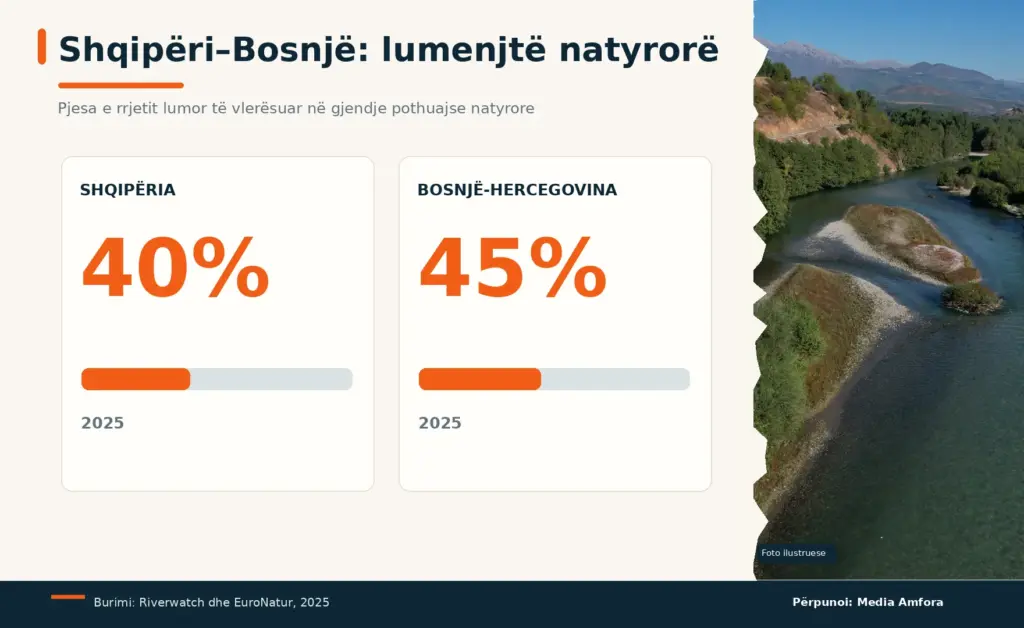
According to the scientific report “State of Balkan Rivers 2025”, Albania, like Bosnia and Herzegovina, has recorded one of the most significant deteriorations in river conditions in the region. The proportion of river stretches classified as near-natural declined from 68% in 2012 to 40% in 2025, a decrease of 28 percentage points.
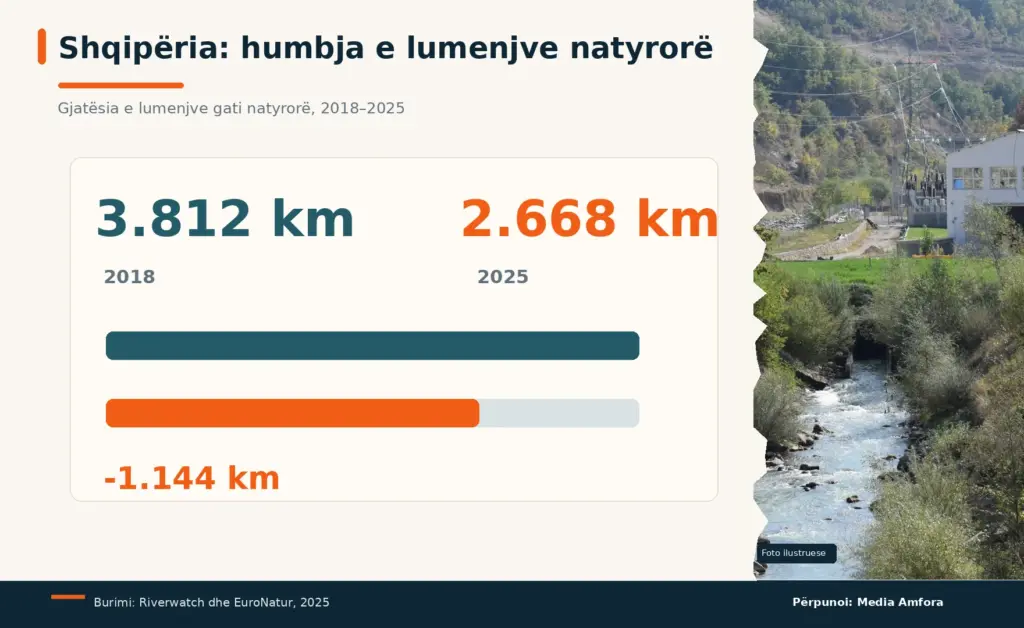
Between 2018 and 2025 alone, the total length of these river stretches fell from 3,812 kilometres to 2,668 kilometres. Researchers identify hydropower plant construction and interventions altering natural river flows as major drivers of degradation, alongside sediment extraction and other infrastructure developments.
“In many cases, water resources have been exploited indiscriminately, leaving families and farmers without access to water supplies or the means to carry out their agricultural activities,” said economist Klodian Muço, referring to hydropower concession policies and practices in Albania and the wider Balkan context.
According to Muço, hydropower plants have contributed to electricity generation, but these benefits must be weighed against the financial support provided, the exploitation of water resources and the long-term costs.
“Climate change is making electricity generation increasingly unpredictable, as the installed capacity of a hydropower plant does not guarantee the same level of energy production throughout the year,” Muço observed.
For environmental engineer Danjel Bica, the impact of these hydropower plants on local economies is negligible.
“Once a hydropower plant has been built, two or three people might be employed. These hydropower plants are not necessary on the grounds that they generate income for local communities,” Bica explained.
In its 2025 report, the European Commission found that no progress had been made under Chapter 27, covering the environment and climate change. Brussels called for the full implementation of environmental impact assessment legislation, compliance with obligations concerning water protection, and the assurance of public participation in decision-making.
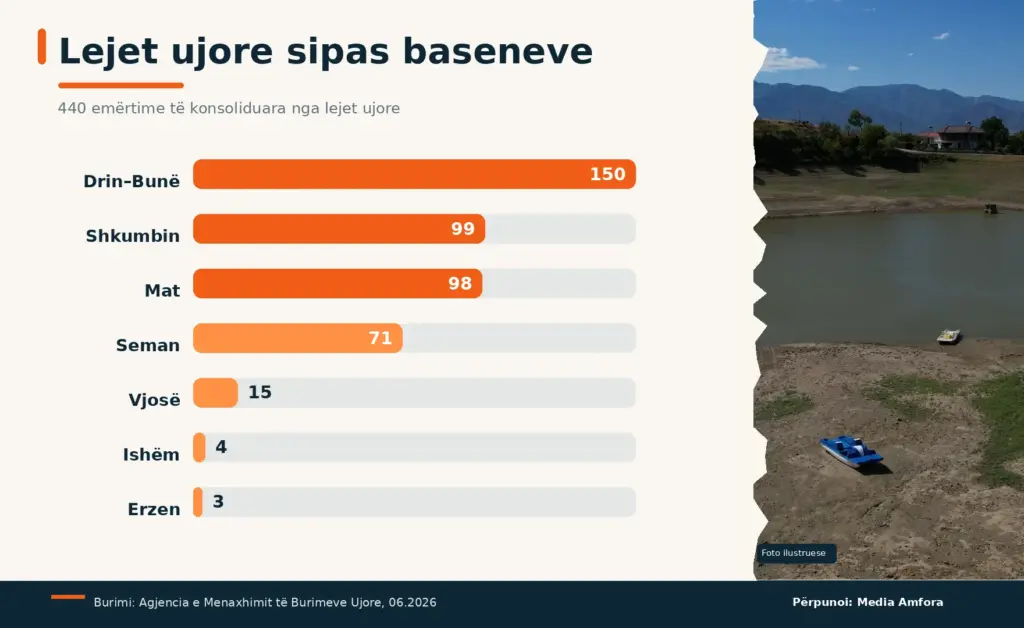
The concentration of small hydropower plants in Albania becomes even more apparent when examining the country’s river basins. Of the 440 identified project groupings, 150 are located in the Drin-Buna basin, 99 in the Shkumbin basin and 98 in the Mat basin. Together, these three basins account for nearly 79% of the consolidated records, indicating that interest in hydropower development has been concentrated in some of the country’s major river systems.
In Kurdari, Residents “Abandon Their Fields” to Defend Their Water
In Kurdari, in the Mat region, the debate over energy strategies translates into a far more immediate concern: whether there will be enough water for farmland and livestock. Lefter Sula, one of the residents opposing the construction of the “Doma” hydropower plant, explains how the ongoing confrontation with the company forces farmers to step away from their daily agricultural activities.
“I spent more than 30 years living abroad, but I chose to return to my village,” he recalled, describing how his family makes a living through farming and livestock breeding. “I have to leave my own work behind to go out and fight for my right to water,” Sula added. For him, the conflict has brought not only uncertainty about the future but also the loss of valuable working time.
Today, beside the road in Kurdari, an excavator that once entered the Lusa Stream to carry out construction work on the “Doma” hydropower plant remains as a reminder of one of the most intense confrontations between residents and the company seeking to exploit the area’s water resources. Two excavators were forcibly stopped by residents and, under pressure from the community, removed from the construction site and escorted towards the village road.
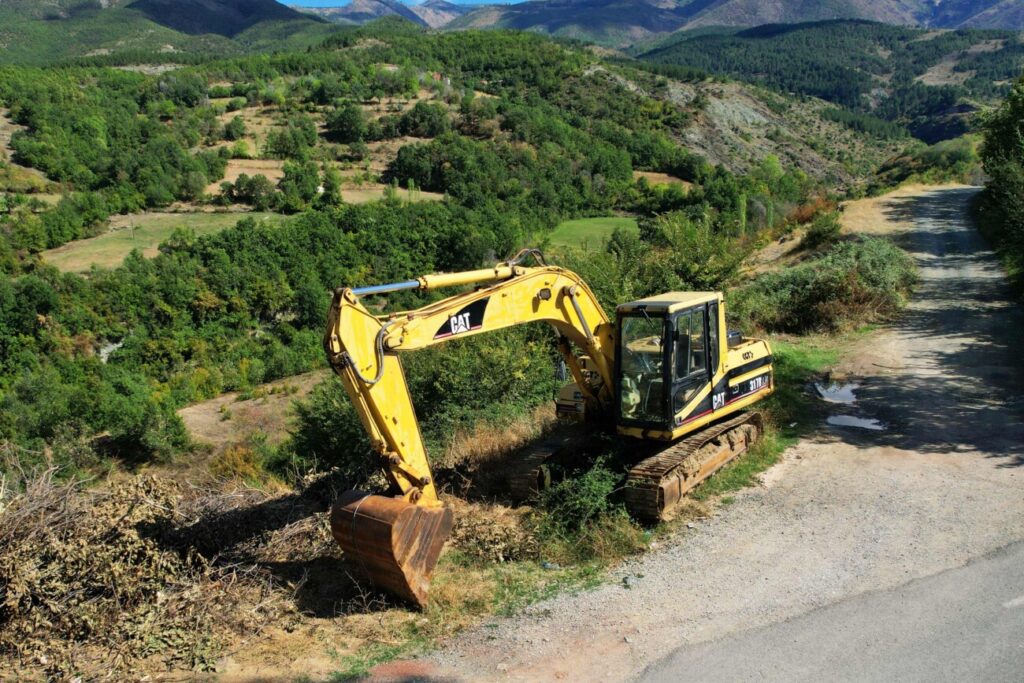
“We will sit here, we will lie down. You will have to drive over our bodies if you want to come and build it,” recalled Milazim Hystuna, the head of the village of Kurdari, describing the confrontation with the company. He explained that residents had asked the excavator operator to remove the machinery from the construction site.
“We did not damage the machine, because the machine itself is not to blame, nor did we use physical violence against anyone,” Hystuna explained.
On 6 March 2026, residents mobilised once again in the early hours of the morning after spotting a machine operating near the stream. It was yet another confrontation in a conflict that, for months, had forced residents to organise monitoring groups, leave their work in the fields and gather whenever they received reports of the company’s presence.
“As soon as they hear that the company has arrived, the residents come out, gather on their own and notify one another,” Hystuna explained. He said that residents had spent months on constant alert, monitoring movements near the stream through phone calls and messages exchanged among themselves.
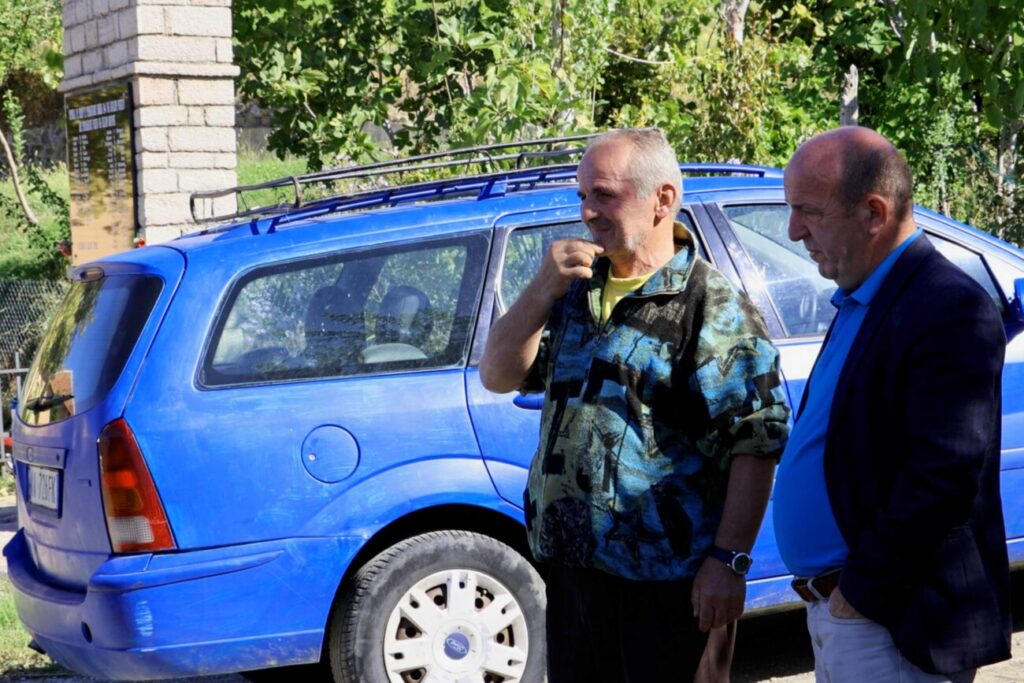
Over time, residents expanded their opposition to several projects aimed at exploiting the Lusa Stream. In addition to “Doma”, two other hydropower plants, “Lusa 1” and “Lusa 2”, have also been proposed in the area by another company.
Following continued opposition, on 19 August 2025, the community organised what it called the “Assembly of Men”, a gathering that also included women, young people and emigrants who had returned to their hometown. Through this initiative, they sought to adopt a memorandum opposing the hydropower plants and use it in their legal battle, alongside a petition that, according to residents, collected 705 signatures.
“We gathered to defend our rights. We were all there, the entire village. That was a public hearing, because a public hearing is when the whole village is present,” Hystuna explained, challenging the way consultations on hydropower projects have been conducted.
Over a period of nearly one year, Kurdari residents organised at least seven public mobilisations and protests against the construction of the “Doma” hydropower plant. These took place from the Lusa Stream to the offices of the Municipality of Klos, the Administrative Court in Tirana and the Albanian Parliament. Meanwhile, repeated confrontations with company representatives also prompted police intervention.
On 4 July 2025, a dispute between residents and individuals linked to the construction company escalated into a physical confrontation. The following day, the Dibër Local Police Directorate announced that it had referred the case to the Prosecutor’s Office and initiated criminal proceedings against four residents suspected of “Intentional Minor Bodily Injury”, “Taking the Law into One’s Own Hands” and “Destruction of Property”. According to the police, they were suspected of damaging a company vehicle and assaulting a 39-year-old man involved in the investment. Residents, on the other hand, claimed they had been provoked and that the excavator operator had attempted to strike them with the machinery.
A 2017 study, conducted by the organisations EcoAlbania, Milieukontakt Albania and Lex Ferenda, identified 18 hydropower-related conflicts between 2012 and 2016, during which 34 people were arrested or taken in for police questioning, including six women and one minor. The study also documented one death resulting from a conflict over the construction of a hydropower plant, one injured person and one attempted murder.
For Halim Kadiu, a resident of Kurdari, the confrontations have brought not only financial expenses and legal proceedings but also fears that the dispute could escalate into personal hostility and violence.
“Why should we become enemies? They have already harmed us financially, and now they are going to harm us as human beings,” he said, calling on the authorities to intervene to prevent the conflict from escalating to the point where people take the law into their own hands.
In Kurdari, water holds a value that goes far beyond everyday use. The Lusa Stream, which flows down from the Balgjaj Lakes area, supplies an irrigation reservoir and agricultural land across several villages. According to Milazim Hystuna, the head of the village of Kurdari, the reservoir has a capacity of approximately 500,000 cubic metres and takes three to four months to fill.
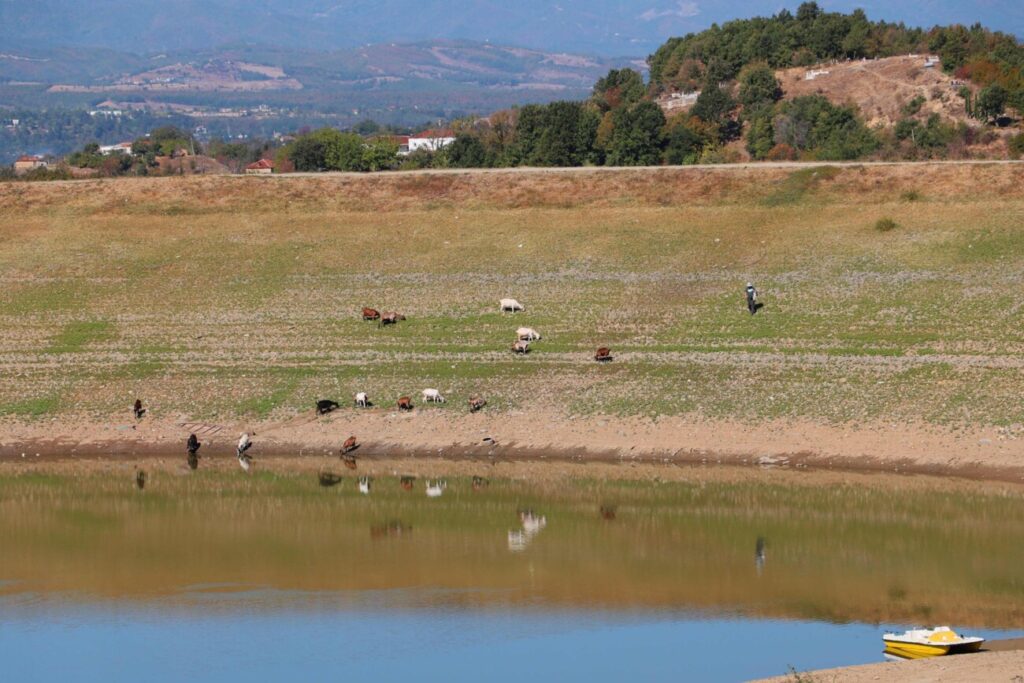
The Suç Administrative Unit, part of the Municipality of Klos, comprises five villages: Kurdari, Skënderaj, Kurqelaj, Suç and Kujtim. According to the 2023 Population and Housing Census, the administrative unit has an officially recorded population of 1,770 residents.
Documents obtained by Media Amfora show that the “Doma” hydropower project has continued to advance through administrative procedures despite longstanding opposition from the local community. The contract for the construction of the hydropower plant, with an installed capacity of 1.695 megawatts, dates back to 27 December 2018. The project received a preliminary environmental impact assessment decision on 7 September 2023 and a water resource use permit on 26 December of the same year, valid until 26 December 2028. The construction permit is dated 23 January 2025.
The project developer is “Global Interprise Group”, a company established in January 2008 and managed by Ashim Doma. According to commercial registry records, its share capital is divided among Shefki Doma, who holds 34%, Ashim Doma with 33%, and Besmir Doma with 33%. The company has operated in several sectors, including trade, mining and construction, while the construction and operation of the “Doma” hydropower plant was added to its registered business activities on 15 May 2017. Ashim Doma is also listed as the administrator and sole shareholder of “Doma Group”, established in 2017. This company is linked to another hydropower project in the Mat region, the “Vinjolli 1” hydropower plant, with an installed capacity of 1.84 megawatts.
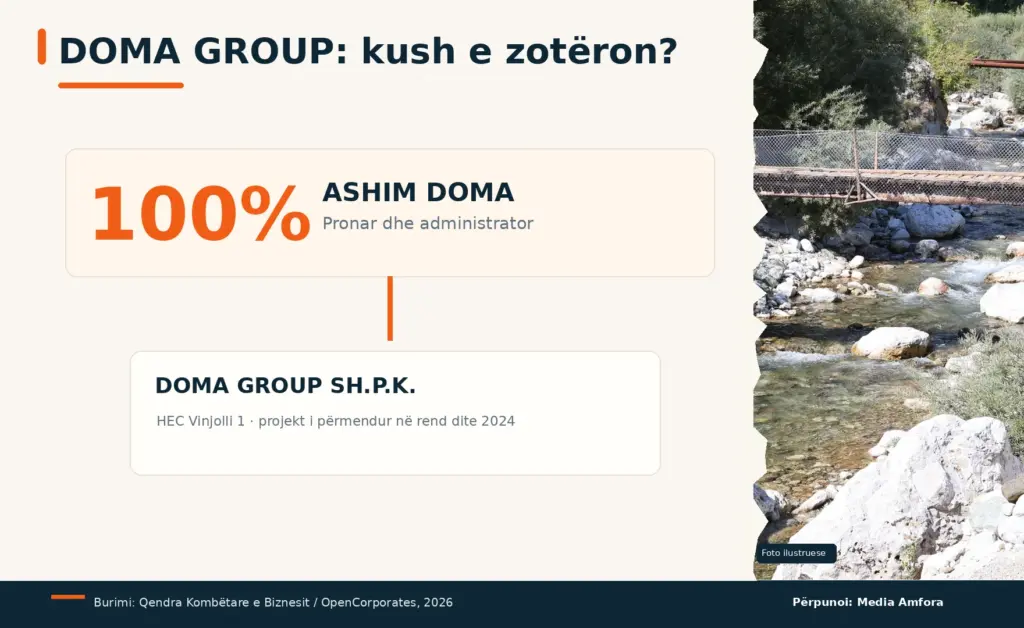
On 10 August 2026, the Energy Regulatory Authority (ERE) approved an electricity generation licence for “Global Interprise Group”, the developer of the “Doma” hydropower plant, through Decision No. 220. Meanwhile, residents’ resistance had also reached the courts. In 2025, they filed a lawsuit seeking to have decisions of the Klos Municipal Council, contracts for the use of public land, and administrative acts that enabled the construction of the hydropower plant declared invalid.
On 16 October of that year, the Administrative Court of First Instance in Tirana rejected their request for a temporary suspension of construction work, without reaching a final determination on the legality of the project. According to data provided to Amfora by the Administrative Court of Appeal and subsequently analysed by the newsroom, the case was still being processed.
However, while the legal dispute continued, the project underwent another institutional development. On 15 June 2026, ERE initiated the licensing procedure for “Global Interprise Group”. The regulator noted that no comments from third parties regarding the company’s licensing had been submitted by 25 June 2026, even though residents had long been opposing the project both publicly and through legal action.
Despite these developments, on 10 August 2026, the ERE Board adopted Decision No. 220, granting “Global Interprise Group” a 30-year licence to generate electricity from the “Doma” hydropower plant. The decision requires the company to commence operations by 23 January 2027.
To obtain the developer’s position, Media Amfora sent an official request for comment to “Global Interprise Group”, seeking its response to the issues raised. However, no reply had been received by the time this article was published.
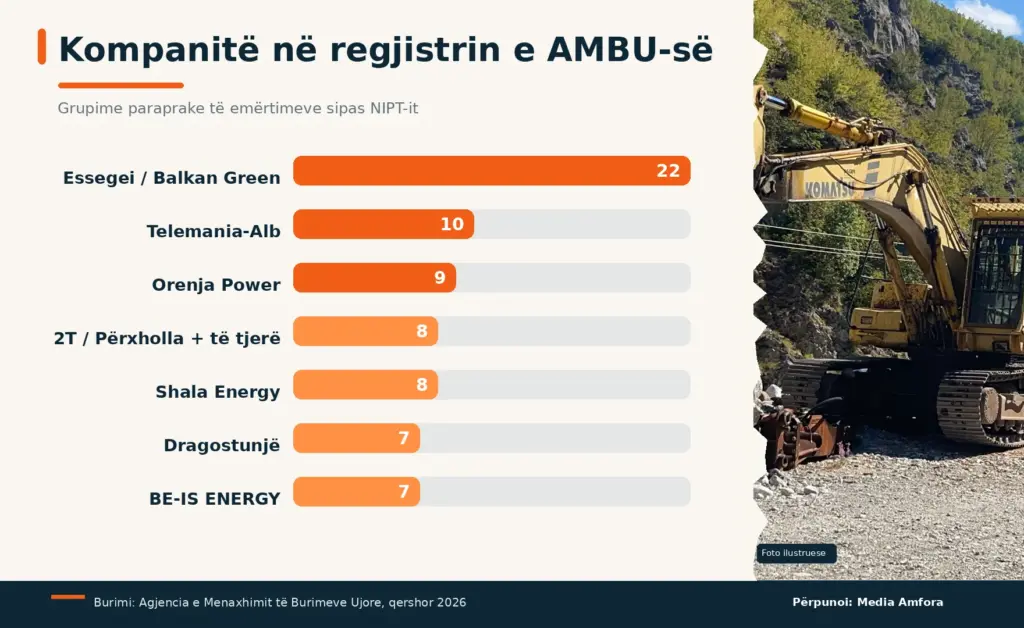
Behind the project names that repeatedly appear in official documents are companies that have accumulated a significant number of hydropower plants across different parts of the country. According to Amfora’s analysis, the “Essegei/Balkan Green” group is linked to 22 hydropower plants, “Telemania-Alb” to 10, “Orenja Power” to 9, while “Shala Energy” and the “2T/Përxholla” group are each associated with 8. The timeline of these projects also shows that interest in exploiting water resources has persisted over the years, with projects documented across different periods.
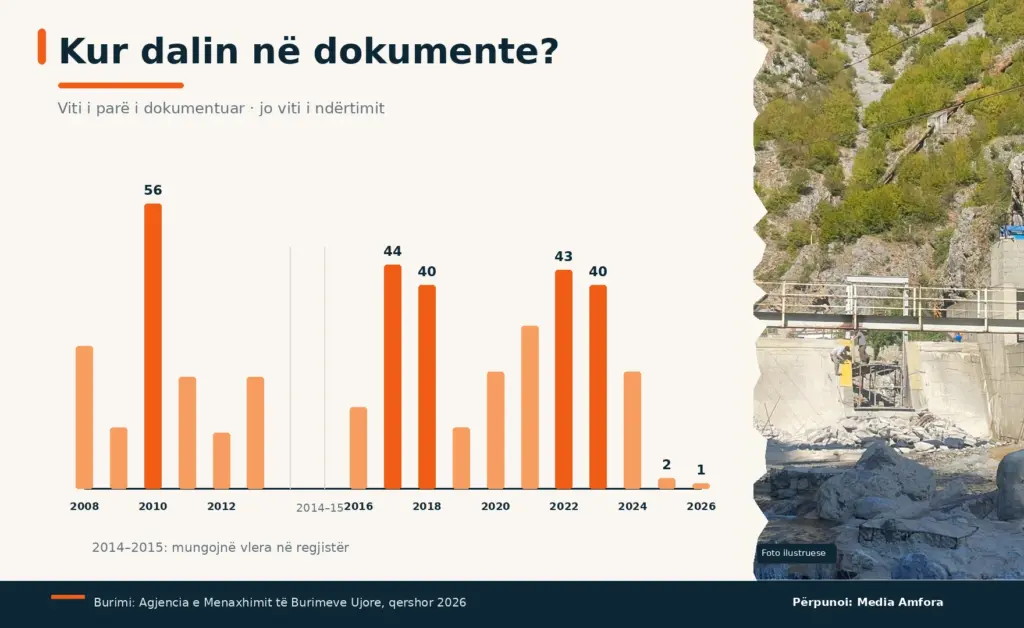
The year 2010 recorded the highest number of first appearances in the analysed register, with 56 project names, while significant concentrations were also observed in 2017 with 44, 2018 with 40, 2022 with 43, and 2023 with 40.
The Battle to Irrigate Farmland
For farmers in Shtiqën and Nangë, in Kukës, the fears of Kurdari residents have become a reality. A shortage of irrigation water during the summer of 2026 prompted them to protest outside the Municipality of Kukës, accusing a hydropower plant operating in the village of restricting the release of water for irrigation.
“This situation also occurred in the previous two years, but this summer was extremely dry, so we decided to protest,” explained Arben Trota, a resident of the village of Shtiqën.
“Whenever I recorded and published videos denouncing the situation, the water would start flowing again,” he added, referring to the Shtiqën irrigation canal, which, according to residents, supplies water to approximately 820 hectares of agricultural land.
Following complaints from farmers in Kukës, Amfora reviewed a report from an inspection conducted by the National Agency of Natural Resources (AKBN) on 27–28 August 2026. According to the records examined, the “Pobreg” hydropower plant had generated electricity almost throughout the entire month of June and during several periods in July, including daytime hours. The Ministry of Infrastructure and Energy reminded the concessionaire, “Energy Plus”, of its obligation to ensure the water needed for irrigation, while the inspection also identified water losses caused by the condition of the irrigation canal.
“I used to grow potatoes and cabbage on about two dynym of land, but I haven’t cultivated it for the past two years because I cannot rely on having water. The first time, my crops failed because of the drought,” Trota concluded.
The conflict between electricity generation and communities’ water needs has also been documented by Albania’s Supreme State Audit Institution (KLSH). In its audit of the “Madhesh” and “Traja 1” hydropower plants in the Mat region, KLSH found that the projects had made no provision for irrigation water, despite documented requests submitted by residents. Another KLSH audit, completed in May 2025, concerning the “Sasaj” hydropower plant in southern Albania, documented failures to comply with obligations to maintain the ecological flow, causing damage to the ecosystem and difficulties in irrigating agricultural land. The facility’s environmental permit stipulated that during dry periods, depending on river flow levels, the amount of water required to remain in the natural riverbed could reach up to 100% of the available flow.
Conflicts over water use and electricity generation mainly arise in cases involving small-capacity hydropower plants. The “Doma” hydropower plant is designed with an installed capacity of 1.695 megawatts, while the “Jovići” project in Bosnia and Herzegovina has a capacity of just 0.6 megawatts. Nevertheless, these two relatively small investments have been at the centre of conflicts lasting for years.
In Bosnia and Herzegovina, Small Hydropower Plants Generated Just 2.41% of Electricity
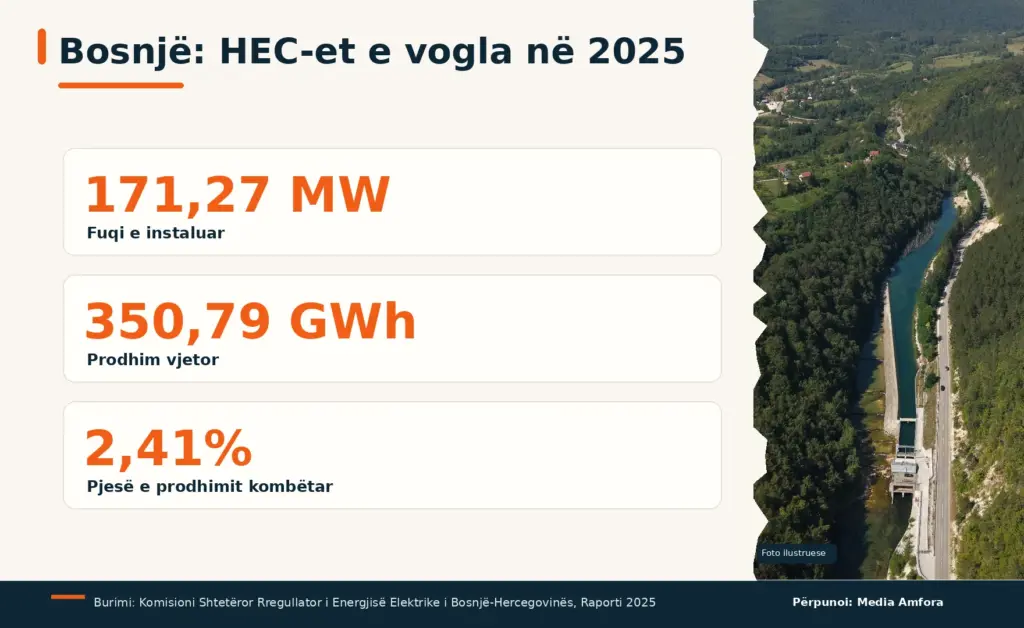
According to data from the State Electricity Regulatory Commission of Bosnia and Herzegovina (DERK), small hydropower plants, with a combined installed capacity of 171.27 megawatts, generated 350.79 gigawatt-hours of electricity in 2025. This accounted for just 2.41% of the country’s total electricity generation. During the same period, solar power generation reached approximately 1,156 gigawatt-hours, more than three times the electricity produced by small hydropower plants.
On the other hand, Petar Đokić, Minister of Mining and Energy in the Government of Republika Srpska, considers small hydropower plants to be investments that contribute to economic development and job creation. According to him, the value of investments in small hydropower plants built in Republika Srpska has exceeded 270 million convertible marks (approximately 138 million euros). “We have paid for the electricity they generated and supplied it to households and businesses. That is a benefit, just as the investment itself is,” Đokić argued, emphasising both the direct and indirect effects on the economy.
“I believe we should never stand in the way of development. Development is what we strive for,” he concluded.
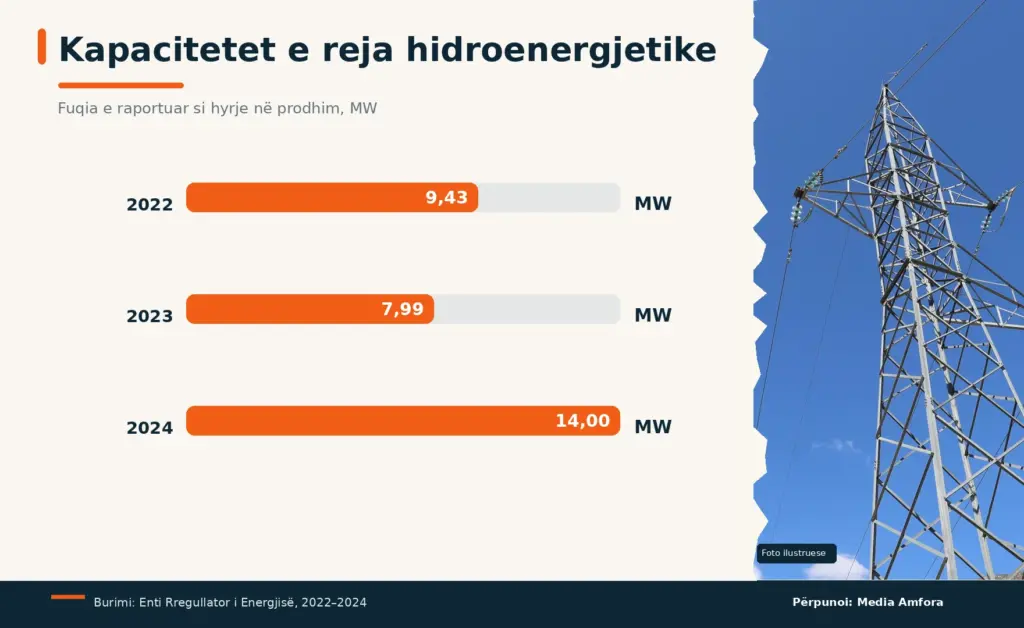
On the other side of the Balkans, in Albania, according to the annual reports of the Energy Regulatory Authority, new hydropower plants with a combined installed capacity of 31.42 megawatts began generating electricity between 2022 and 2024: 9.43 MW in 2022, 7.99 MW in 2023 and 14 MW in 2024. Meanwhile, according to INSTAT, private and concession-operated hydropower plants generated 3,109 gigawatt-hours of electricity in 2025, accounting for 41.6% of domestic electricity production. However, this category also includes large hydropower plants, meaning the figures cannot be directly compared to assess the contribution of small hydropower plants.
To understand the scale of this development, a study by Riverwatch and EuroNatur, updated in 2024, identified 3,188 planned hydropower plants, 94 under construction and 1,836 in operation across the Balkans. Approximately 92% of the planned projects had an installed capacity of less than 10 megawatts, while nearly half of the projects planned or under construction were located within existing or proposed protected areas.
For Ulrich Eichelmann, coordinator of the “Blue Heart of Europe” project and executive director of Riverwatch, the importance of the Balkan rivers extends far beyond the region’s borders.
“I would say that the rivers of the Balkans are of global importance. They are still in a natural state that we lost long ago in the rest of Europe. This means they are still alive, they can flow freely, and they are home to many birds and fish, an extraordinary wealth of wildlife,” he explained.
“That is why we call the rivers of the Balkans the ‘Blue Heart of Europe’. And it beats right here, in the Balkans!” Eichelmann emphasised, describing this natural heritage as still relatively unknown across Europe.
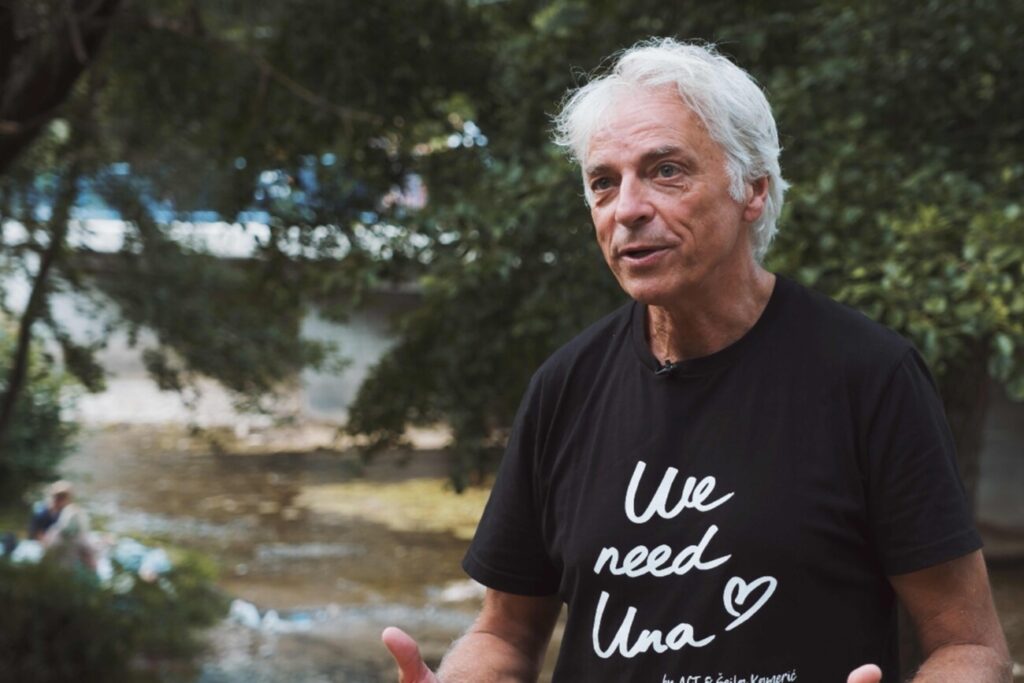
“While other European countries are working to restore rivers and remove dams, the trend of building hydropower plants continues in the Balkans,” environmental activist Besjana Guri explained, linking this phenomenon to the drive to exploit some of the region’s last relatively untouched rivers.
According to Guri, hydropower development should also be assessed in terms of the benefits it brings to the communities where the plants are built.
“Even when a hydropower plant is built within a community, it must translate into tangible services for that community, generate revenue for the municipality or local authority, or even provide electricity directly to the community,” Guri argued. She noted that such benefits are often promised but have not materialised in many of the cases she has followed during her work.
Economist Klodian Muço believes that concession policies should also be examined from a long-term perspective, as hydropower infrastructure depreciates over time and climate change may further limit electricity generation.
“Will we actually have anything left after 35 years from the date the permit was granted? In my opinion, once again, the answer is no, because depreciation is extremely high,” he said, referring to the costs associated with turbines and sediment accumulation in hydropower facilities.
As hydropower projects continue to be developed across Albania, the country’s rivers have lost a significant part of their natural character. Data from the Riverwatch and EuroNatur study show that, between 2018 and 2025 alone, the total length of river stretches classified as near-natural in Albania declined from 3,812 to 2,668 kilometres. Within seven years, the country lost 1,144 kilometres of river stretches in this category, a decrease of approximately 30%.
Meanwhile, in Bosnia and Herzegovina, opposition to small hydropower plants has also led to legislative changes. In July 2022, the Parliament of the Federation of Bosnia and Herzegovina adopted a ban on issuing new energy permits for hydropower plants with a capacity of up to 10 megawatts, subject to exceptions defined by law and transitional provisions for existing concessions. According to Riverwatch, the measure was expected to prevent at least 116 planned projects.
However, the ban does not apply throughout Bosnia and Herzegovina. The “Jovići” project on the Pliva River is located in Republika Srpska, where the dispute over the concession and environmental permits continues. Although the District Court in Banja Luka annulled three environmental permits for the project between 2025 and 2026, the investment had not been definitively abandoned.
Rivers “Flow” into the Court
For communities opposing hydropower plants, protests are often only the beginning of a much longer battle. In Albania, some of these disputes have ended up in court, where residents seek the annulment of environmental permits, construction permits, water use permits and concession contracts that enable the exploitation of rivers for hydropower generation.
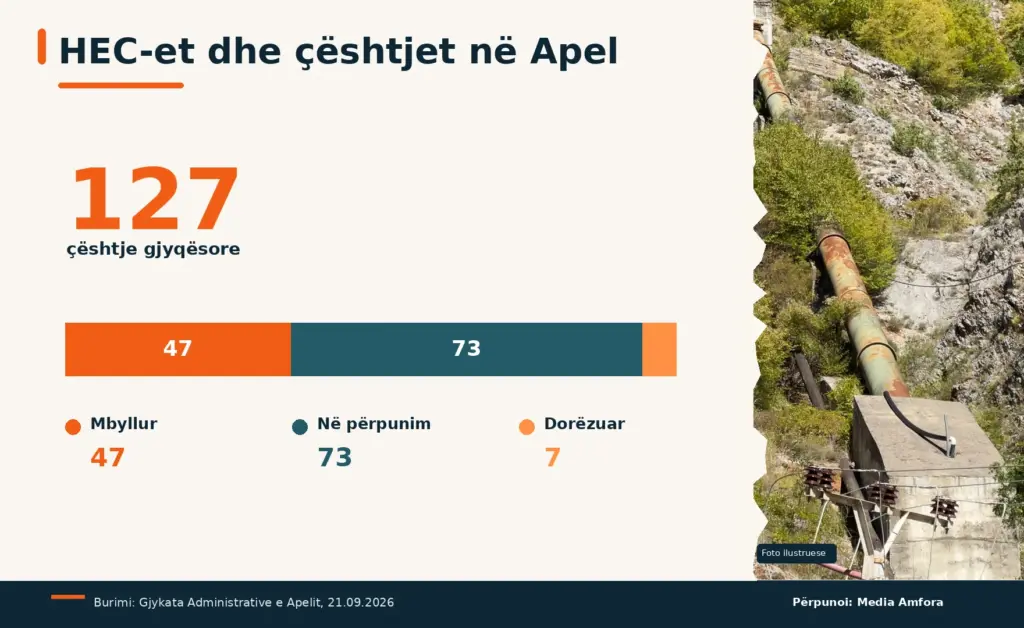
Amfora analysed data provided by the Administrative Court of Appeal and identified 127 cases related to the hydropower sector, of which 73 were still being processed, 47 had been closed and seven were recorded as submitted. However, not all of these cases represent challenges brought by residents, as they also include commercial, tax and administrative disputes between companies and public institutions.
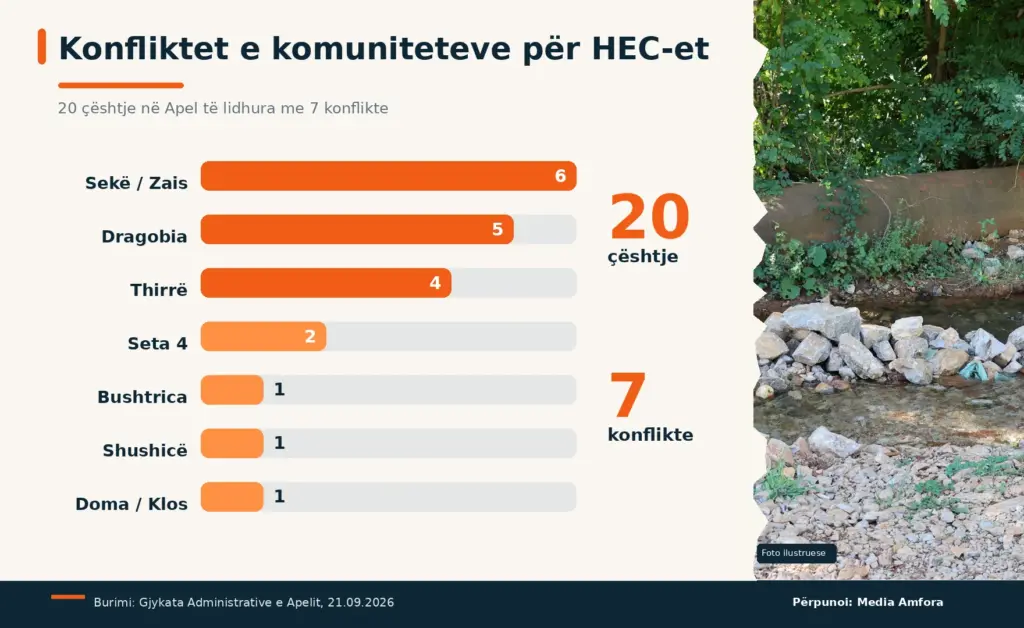
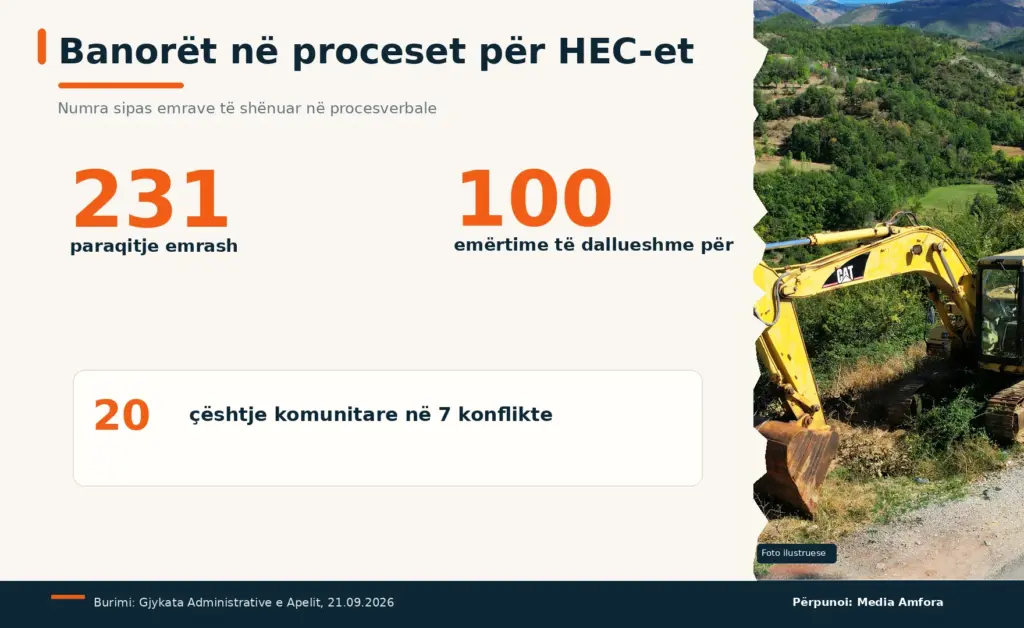
Of the total, Amfora identified at least 20 community-related court cases, involving seven distinct disputes. Six of these cases relate to the “Sekë” and “Zais” projects, five to “Dragobinë”, four to “Thirrë”, and two to “Seta”, while the remaining cases involve “Bushtricë”, “Shushicë” and “Doma” in Klos.
Çidhna: Over Seven Years in Court Over the “Seta 4” Hydropower Plant
Eleven residents of Çidhna, in the Dibër region, spent more than seven years fighting a legal battle to secure a ruling in their favour against the “Seta 4” hydropower plant, part of a complex of four hydropower facilities planned along the Seta Stream.
“We spent almost eight years in court. They have dried up the Seta River, and we had to fight to save the Sopanika Waterfall because they wanted to divert its water as well,” Mexhit Tola, a resident of the village of Çidhën, told Amfora.
Residents opposed the hydropower plant because of its impact on the natural monuments “Seta Gorge” and “Sopanika Spring and Cave”, seeking the annulment of the permits and administrative acts that authorised its construction.
“We agreed that the hydropower plant could be built under different conditions, with open channels allowing the water to evaporate, or with a reservoir that would fill with water so that the trout would not be harmed. But they did not do that. Instead, they diverted the river into pipes,” explained Qazim Daci, one of the plaintiffs.
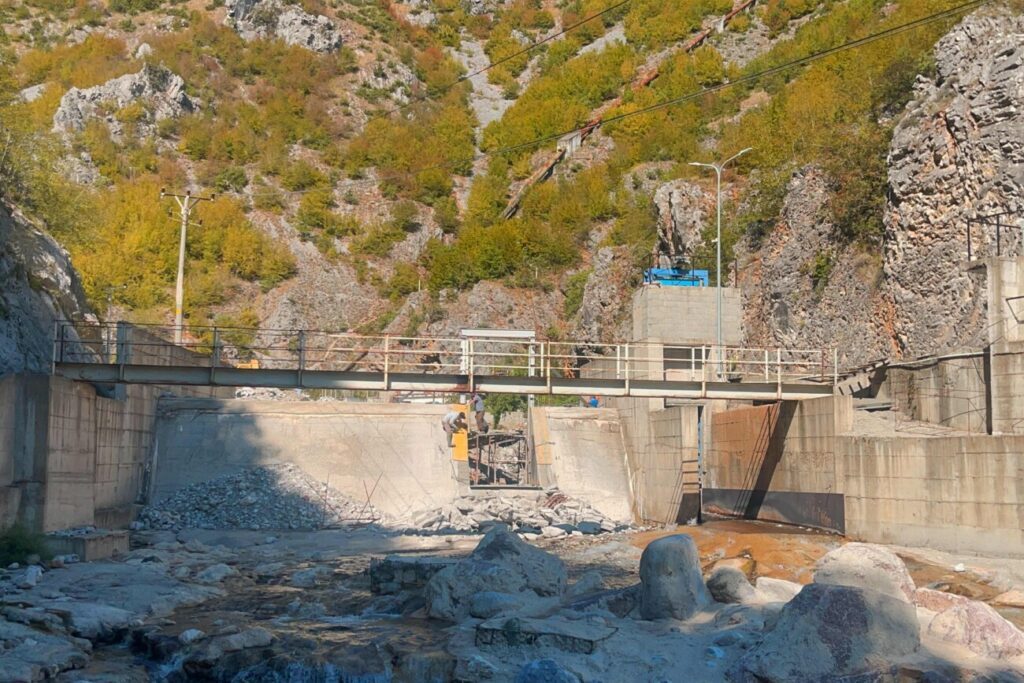
The lawsuit was filed in July 2017 and dismissed by the Administrative Court of First Instance in December 2018. However, on 10 October 2024, the Administrative Court of Appeal overturned the ruling, partially annulling six administrative acts and concession-related decisions concerning “Seta 4” alone. In its reasoning, the court found, among other issues, that the water use permit had been approved by an authority lacking the legal competence to do so and that the environmental assessment had failed to adequately consider the protection of natural monuments. The legal battle subsequently reached the Supreme Court, where, as of August 2026, no date had yet been set for the hearing of the appeal.
The appeal before the Supreme Court concerns the ruling of the Administrative Court of Appeal, which decided in favour of the residents of Çidhna by partially annulling six acts that had enabled the construction of the “Seta 4” hydropower plant, including the construction permit, environmental approval, the relevant section of the concession agreement and water use permits.
“The pipes must be removed by the enforcement authorities. They are the ones who must issue the order. The case is now with the State Bailiff Service because the private bailiff refused to take it on due to pressure,” Qazim Daci explained.
“We’ll see. If the Dibër Bailiff Service gives up, then we will take matters into our own hands and forcibly remove the pipes,” Daci stated firmly.
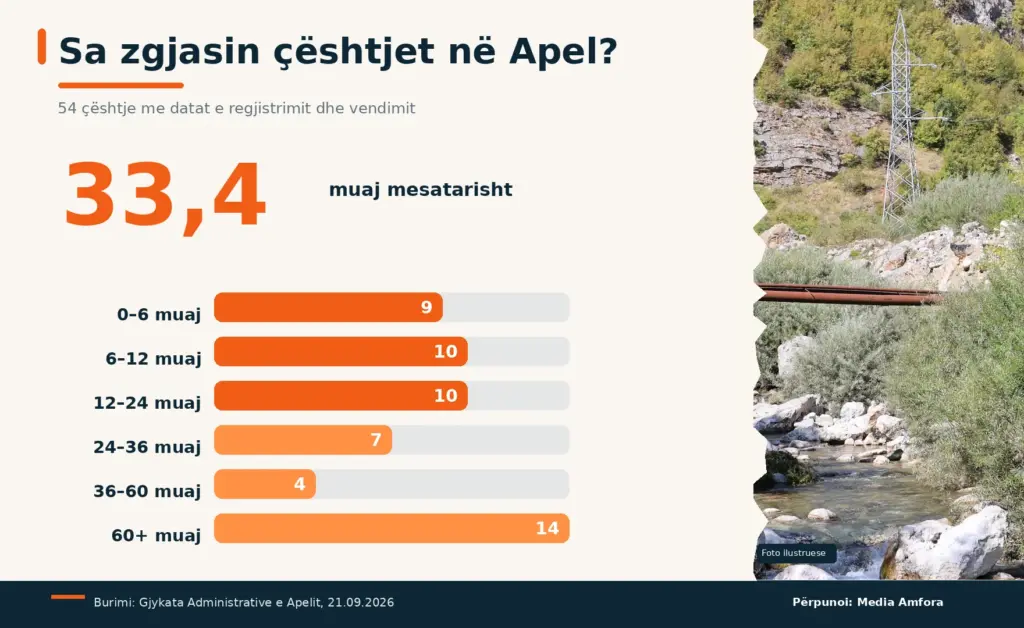
The length of court proceedings reveals another cost of these disputes. In a group of 54 cases with valid date records, appeal proceedings lasted an average of 33.4 months, while the median duration was 20.9 months. In 14 of these cases, or approximately one in four, the proceedings lasted more than five years. For residents who depend on farming and livestock breeding for their livelihoods, such legal battles translate into years of uncertainty and financial expenses, while the projects may continue to advance through administrative procedures.
“There is no longer enough moisture for water to evaporate from the river, and the trees and plants have dried up. This used to be a place where wild trout with red spots lived, but they no longer exist there,” Mexhit Tola explained.
Meanwhile, the National Agency of Protected Areas confirmed to Amfora that the “Seta 1+2” and “Seta 3” hydropower plants, operated by “HYDRO SETA”, are located within the boundaries of the “Lurë–Mali i Dejës” National Park.
“Even though we won the court case, the company is still continuing its work,” explained another resident, Shukri Përgjegji.
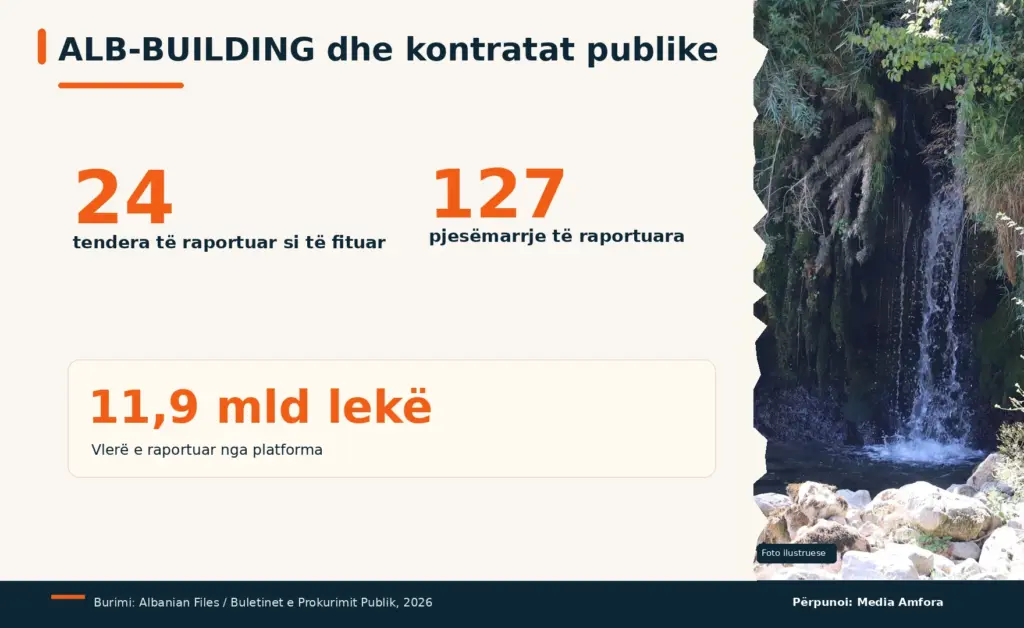
Behind the Seta hydropower plants lies a business structure with substantial economic interests, against which residents have spent years fighting legal battles in court. According to commercial registry records, 74.5% of the share capital of the concessionaire company “HYDRO SETA” is owned by “ALB-BUILDING”, which is equally owned by Pëllumb Beta and Odhise Bresha, each holding a 50% stake. The remaining shares are distributed among “LIQENI VII” with 10.9%, “KUPA” with 8.6%, and “KALIA” and “2 L&M”, each holding 3%.
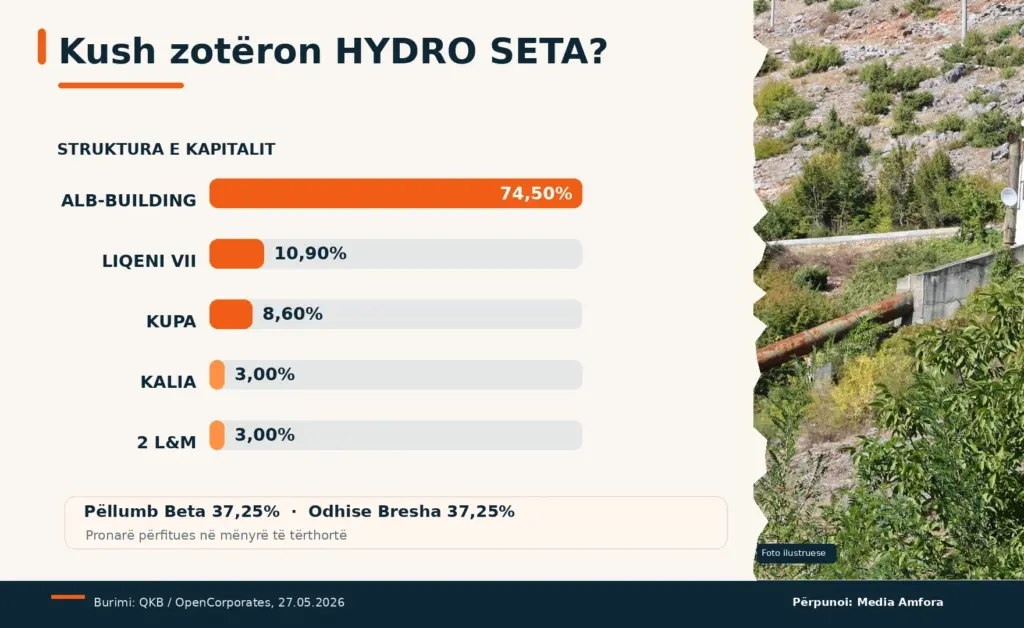
In 2024 alone, “HYDRO SETA” reported approximately 249 million Albanian lek in pre-tax profit (around €2.47 million), while its majority shareholder, “ALB-BUILDING”, was awarded 24 public tenders with a combined value of approximately 11.9 billion Albanian lek (around €118.2 million). The company did not respond to a request for comment before the publication of this article.
The length of this legal battle over a hydropower plant is not an isolated case. Among the 127 hydropower-related cases made available to Amfora by the Administrative Court of Appeal, 73 were still being processed as of September 2026. In a group of 54 cases with valid date records, the average duration of appeal proceedings reached 33.4 months (approximately 2 years and 9 months), while the median was 20.9 months (around 1 year and 9 months). In 14 cases, proceedings had lasted more than five years. These statistics also include disputes between companies and public institutions, but they illustrate the time burden of legal proceedings in a sector where decisions concerning the use of rivers can have long-term consequences.
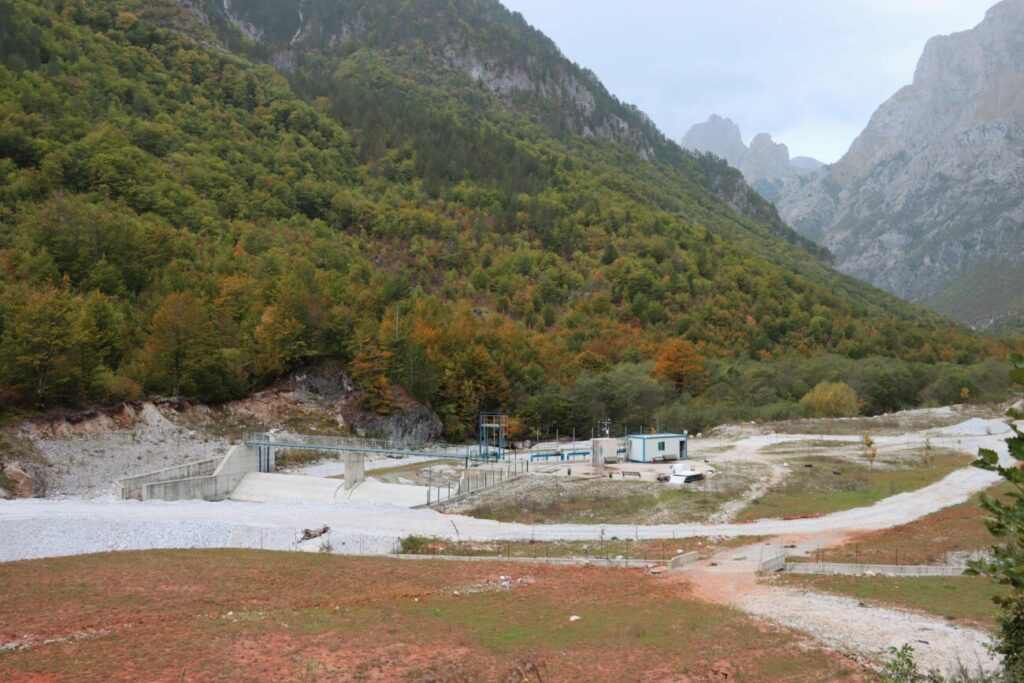
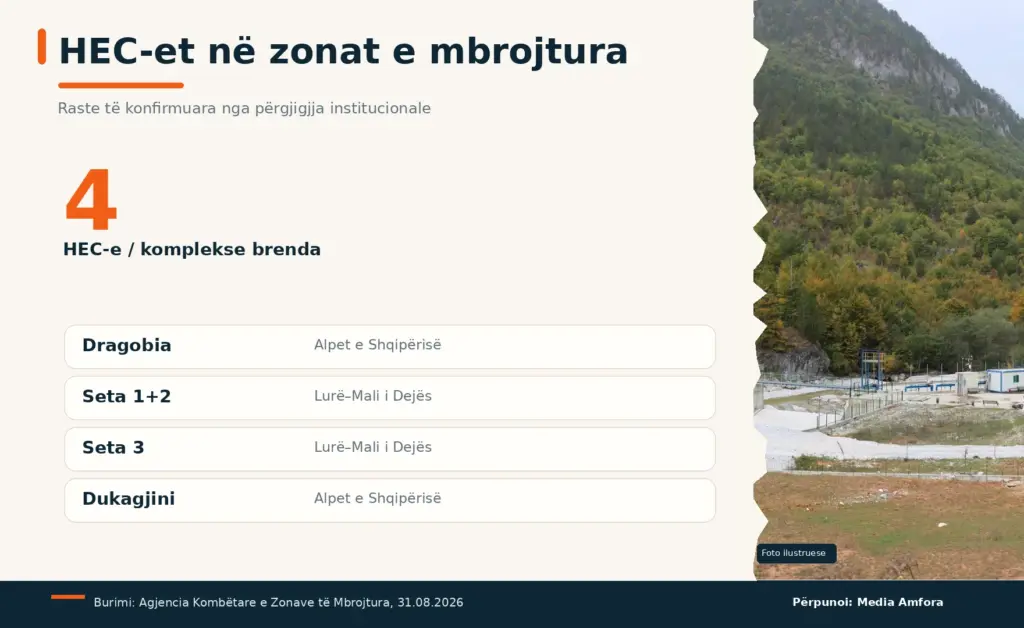
Meanwhile, some hydropower plants remain within areas designated for special protection. In its official response dated 31 August 2026, the National Agency of Protected Areas (AKZM) identified four hydropower facilities or complexes located within protected areas: “Seta 1+2” and “Seta 3”, inside the “Lurë–Mali i Dejës” National Park, as well as “Dragobia” and “Dukagjini–Ndërlysa”, within the “Albanian Alps” National Park. However, the scale of this phenomenon has previously been documented as considerably more widespread.
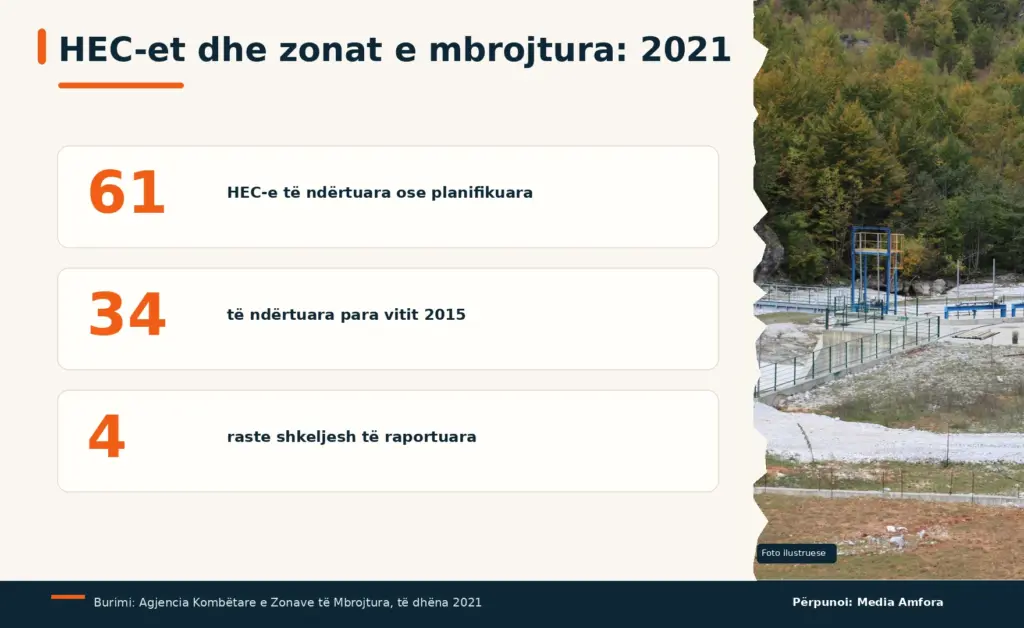
According to earlier data obtained by Amfora, the National Agency of Protected Areas (AKZM) had previously identified 61 hydropower plants built or planned within protected areas, of which 34 had been constructed before 2015. The agency had identified only four cases of violations, while an audit by Albania’s Supreme State Audit Institution found five lease agreements for the use of public forest land for hydropower plant construction within protected areas, in violation of the relevant legislation.
As residents in Albania and Bosnia and Herzegovina continue to travel between their villages and courtrooms hundreds of kilometres away, efforts to prevent the further shrinking of the “Blue Heart of Europe” face energy policies that still favour hydropower development through the construction of small dams. Protecting rivers also remains a test for both countries’ European Union integration processes.
In its 2025 report on Albania, the European Commission noted that water extraction from rivers and protected areas, without consultation with local communities and environmental organisations, had led to conflicts. Bosnia and Herzegovina was also assessed as having made no progress in the field of environment and climate change, with the Commission calling for improvements in environmental impact assessments, greater transparency in administrative procedures and stronger public participation in decision-making.
From the Pliva River in Bosnia and Herzegovina to the Lusa Stream in Albania, residents continue to oppose hydropower projects that they believe threaten the water resources on which their communities depend.
“When we saw what was happening with the potential construction of the Jovići hydropower plant, we decided to get involved and try to stop it,” recalled Miloš Mitrić, one of the founders of the “Defenders of Pliva” group.
Meanwhile, in the Albanian village of Kurdari, Rexhep Kuleni sees this struggle as a responsibility towards future generations.
“A schoolchild once asked me: ‘Grandpa, where are you going? To the protest? Is Doma [the hydropower plant] taking our water away?’ We have a responsibility to those children, to the generations yet to come, because if we make a mistake today, tomorrow it will be too late,” Kuleni concluded, his brow furrowed and his gaze reflecting his determination to continue this struggle to the very end.
“This article was produced with the support of Journalismfund Europe.” The views and opinions expressed are those of the authors and do not necessarily reflect the views or positions of Journalismfund Europe.

Gazetarë: Geri Emiri dhe Dejan Rakita. Ky investigim ndërkufitar u publikua në Shqipëri nga ©Amfora.al dhe në Bosnjë-Hercegovinë nga ©Objavi.ba.