


Polena’s carnival: Albania’s overlooked celebration
Three days ago, the village of Polena, Korça, celebrated one of the most wonderful and colorful events in southeastern Albania: The Carnival of Polena. Yet, despite its rich symbolic and cultural value, the event remains largely forgotten.
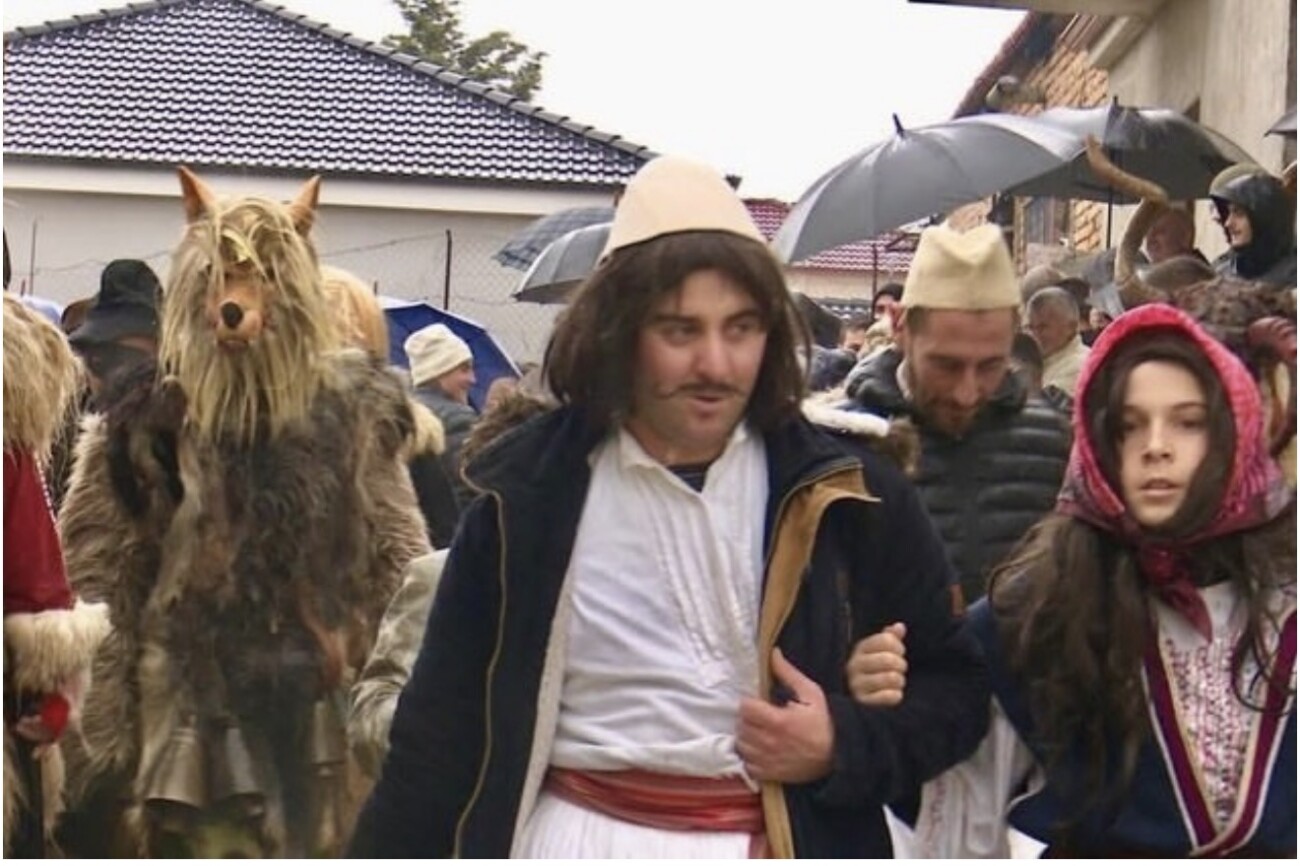
Picture from this year's event. Source: Korça municipality
As the ‘Arapë’ bells echo through Polena’s narrow streets, villagers of all ages gather to watch and join the spectacle. The masked figures, covered in animal skins and bells, chase each other and play with the children, symbolizing the struggle between winter’s darkness and the promise of spring.
Much like Bulgaria’s ‘Kukeri’, this ritual celebrates renewal and community, yet today it remains largely forgotten beyond Polena, surviving mainly through the dedication of local participants.
In the village of Polena, located 9 kilometers west of Korça and 14 kilometers east of Voskopoja, every January 6th, the Carnival unfolds as an ancient winter ritual rather than a typical urban festivity.
Celebrated on the ‘Day of the Blessed Water’, an imporant day for Albania’s Catholic community,the event marks a symbolic transition from darkness to light, from the hardships of the old year to the promise of renewal in the new one.
Although its origins are unknown, some scholars suggest the festival has pre-Christian roots linked to seasonal cycles and fertility beliefs. The ‘arapë’, dressed as masked performers representing chaos and winter, symbolize the forces of darkness that must give way to life, order, and harmony.
Celebrated for three centuries, the carnival resumed in 1991 after the fall of communism in Albania. Today, it survives entirely through local initiative, with organizers like Gjergj Minka noting photographs from 1986 document its longstanding role in the community, even though it received little institutional support from the Albania’s communist authorities.
Polena’s Carnival in Albania shares strong similarities with Bulgaria’s ‘Kukeri’ and related masked winter rituals found across the Balkans, including in North Macedonia, northern Greece, Romania, Slovenia, and parts of Serbia. Masked men, dressed in bells and animal imagery, share the same purpose: chasing away evil spirits and securing prosperity for the new year.
These similar celebrations expose a comparable Balkan ritual heritage, preserved in rural communities and transmitted across generations.
For those seeking a glimpse into Albania’s hidden folklore, Polena’s Carnival offers a rare opportunity to witness a living tradition that has survived centuries of change. Unlike similar carnivals in the Balkans, which have gained national and international recognition, Polena’s festival relies entirely on local dedication.
Limited media attention, rapid migration and urbanization as well as the absence of sustained institutional support have contributed to the marginalization of Albania’s broader cultural landscape. Notwithstanding these challenges, the carnival continues to thrive, sustained by community memory, collective participation, and the enduring spirit of the villagers.