


A time of water mismanagement: The forgotten lessons of Durrës
Last week, heavy rainfall arrived in Durrës not as rain, but as punishment. Streets disappeared under muddy waves, homes were damaged beyond repair, and families protested after their property was damaged. In the chaos, a life was tragically lost. Durrës was built to control it.
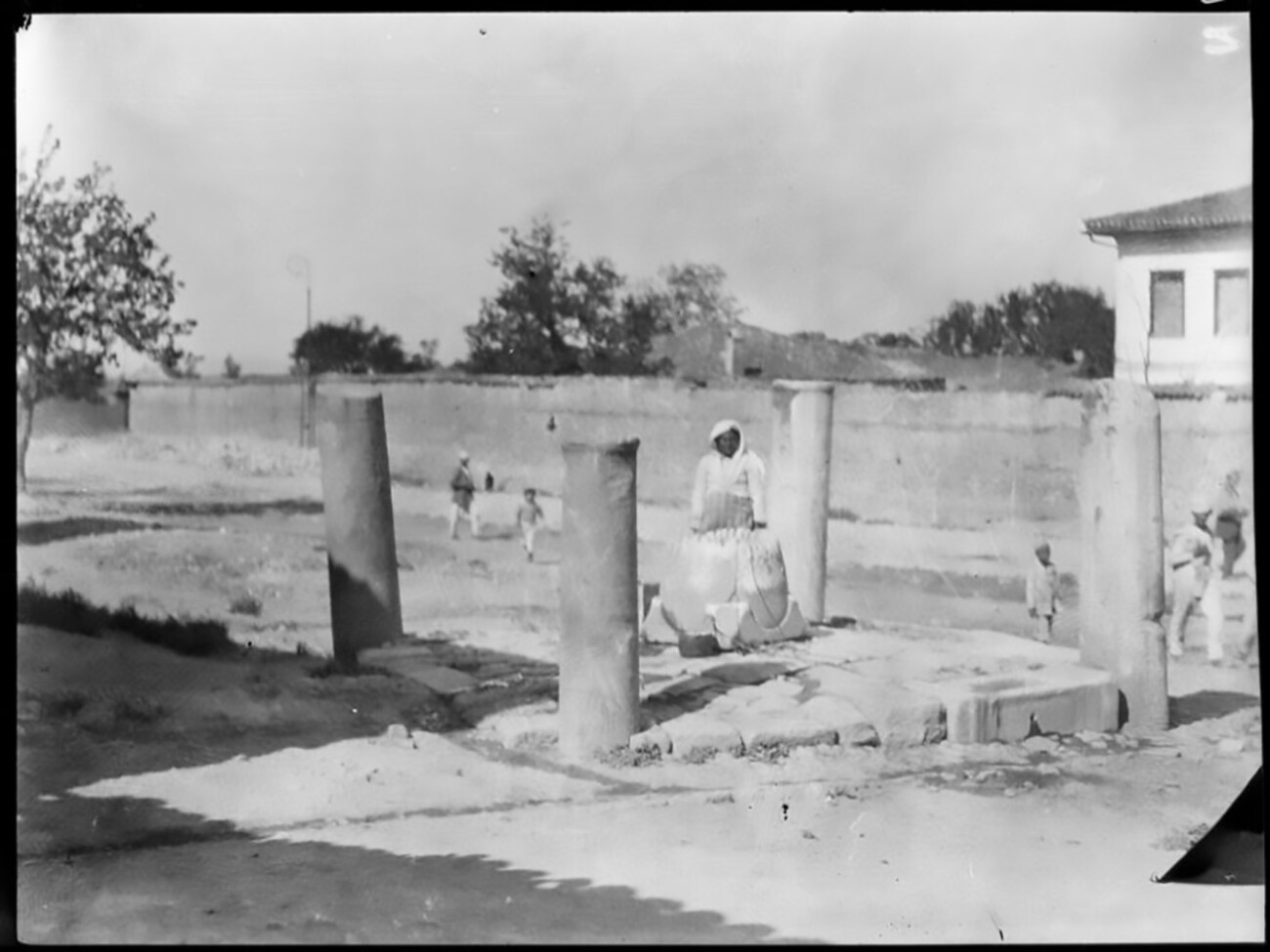
The Tophana well. Durrës 1921. Source: Albania's Digital Archive
To understand the origins of water management, we must look at antiquity. Near the former Industrial School of Durrës, silent traces of an ancient aqueduct still survive.
These remains stretch as far as Rromanat village, in an area known as “Gjoka’s brook.” Built during the reign of Roman Emperor Hadrian (117–138 AD), the Aqueduct of Durres was part of a broader urban vision that also built the amphitheatre, library, and hippodrome.
The aqueduct extended nearly 15 kilometres, carrying water from the Erzen River into the city through an advanced system of lead pipes manufactured in workshops of ancient Dyrrachium.
Some of these pipes, now preserved in the Archaeological Museum of Durrës, still bear the names of the city and their makers; proof that water management was once a matter of planning, craftsmanship, and accountability.
After the decline of Roman infrastructure, the city adapted. Wells became the main source of water, including the famous Tophane Well, located just 300 meters from the city centre.
For centuries, it supplied the central neighbourhoods of Durrës. A 1916 postcard shows the well after its last major repair by the Austro-Hungarian authorities-another reminder that even in difficult times, water systems were maintained.
During the Ottoman period, Durrës relied on hammams and smaller-scale water networks. While functional, the system gradually weakened, and long-term water regulation lost importance. Still, the city survived-until modern neglect arrived.
Durrës has always stood on fragile ground. Large areas were historically marshlands, requiring drainage systems and strict urban rules. Italian and later socialist urban plans recognized this reality, preserving canals and limiting construction in flood-prone zones. After the fall of communism, those plans were ignored.
Rapid and unplanned urbanization spread over former wetlands, drainage channels were blocked or built over, and construction spread without any criteria. Water, deprived of its paths, simply returned to reclaim the city.
The floods of Durrës are not just a natural disaster. They are the result of abandoning centuries of knowledge. Two thousand years ago, this city mastered water.
Today, it drowns under it in the absence of planning. Durrës does not need to become Venice. It needs to remember what it once was.